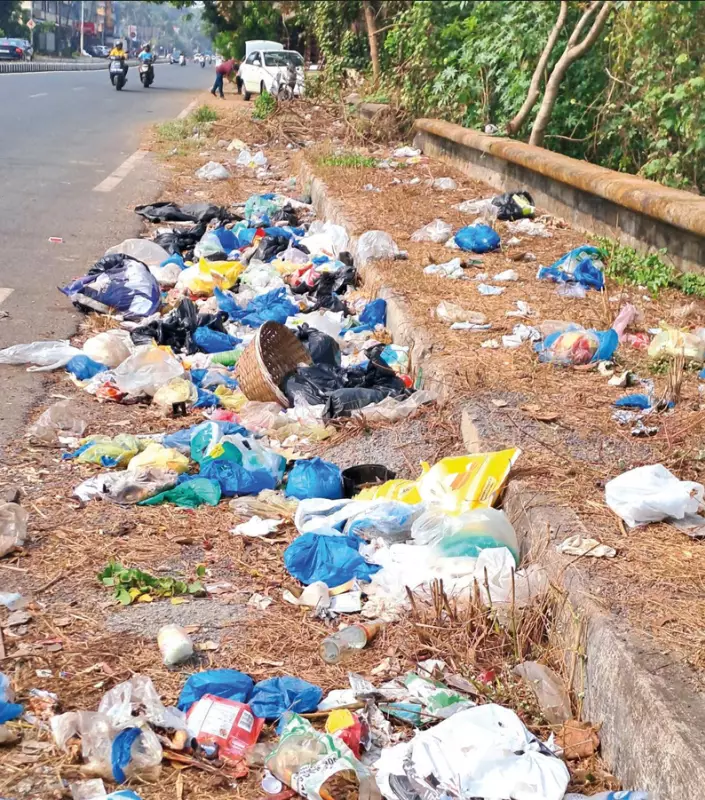
Alarming instances of domestic waste being dumped along roadsides in plastic bags have surfaced across several stretches of the scenic Salcete coastal belt in Goa. This unchecked practice is triggering serious concerns regarding public health, environmental safety, and the contamination of nearby water bodies.
Fresh Dumping Sites Emerge, Panchayats Cite Staff Shortages
New dumping sites have been observed along major thoroughfares. The problem is particularly frequent on roads leading into Margao, approximately a kilometre before the city from directions such as Benaulim, Colva, and Navelim. A key factor worsening the crisis is the continued use of plastic bags by local shops, vendors, and hawkers, despite a ban on single-use plastics being in place.
While village panchayats claim to have issued verbal instructions to commercial establishments, enforcement remains visibly weak. Deputy Sarpanch of Varca, Solon Furtado, confirmed that shops were asked to stop using plastic bags but admitted that physical inspections had not been conducted due to staff shortages. He pointed to the panchayat's weekly dry waste collection and suggested that much of the roadside dumping is done by labourers disposing of waste in plastic bags.

Activists Dispute Claims, Highlight Systemic Failure
Environmental activist Santan Pereira strongly contested the official narrative. “It’s not just migrant labourers. Even Goans are responsible for this mess,” he stated, indicating a broader behavioural issue. The situation underscores a systemic failure in implementing a crucial directive.
Back in 2010, the High Court had directed all village panchayats to establish composting facilities for biodegradable waste and ensure weekly collection of non-biodegradable waste, including plastics. More than a decade later, activists note that panchayats along the Salcete coast have only partially acted on this order.
Enforcement Actions and Consumer Resistance
Some panchayats have attempted crackdowns. Cavelossim Sarpanch Dixon Vaz mentioned that raids were conducted last year, leading to the seizure of plastic bags and fines of Rs 1,000 imposed on shops. He clarified that panchayats lack equipment to measure plastic thickness but assist departments like weights and measures during inspections.
Vendors, however, shift the blame to consumer habits. Vegetable seller Salim Rajab Ali explained the practical challenge, saying customers often refuse to buy produce if it is wrapped in paper instead of plastic. “They just walk away,” he said, highlighting a significant hurdle in phasing out plastic bags at the grassroots level.
The persistent roadside dumping in the Salcete coastal region presents a clear and present danger. It exposes the gap between policy, enforcement, and public cooperation, demanding urgent and coordinated action from authorities, businesses, and residents alike to safeguard Goa's environment and public health.