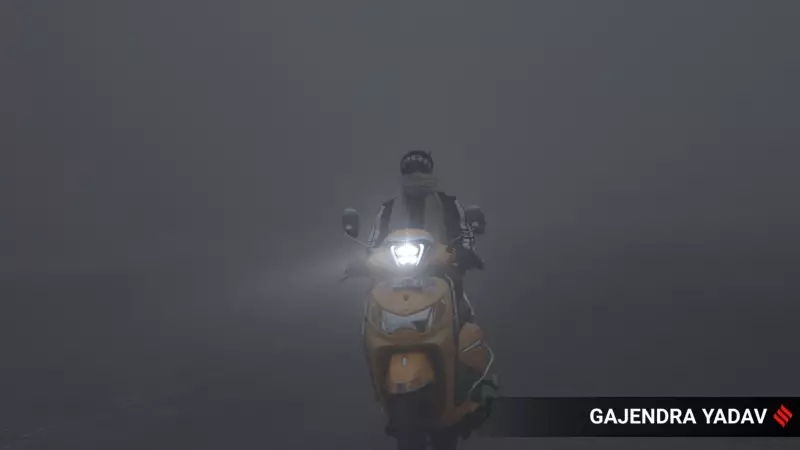
Panchkula's air quality took a severe hit on Sunday, December 21, plunging into the 'Very Poor' category and earning the dubious distinction of being the fourth most polluted city in the country. This alarming development has raised significant public health concerns among residents and authorities alike.
Sharp Deterioration in Panchkula's AQI
According to the latest data released by the Central Pollution Control Board (CPCB) at 4 pm on December 21, Panchkula recorded a 24-hour average Air Quality Index (AQI) of 339. This reading firmly places the city in the 'Very Poor' bracket, indicating hazardous conditions that can trigger respiratory illness on prolonged exposure.
In the national ranking of polluted cities, only three fared worse than Panchkula: Delhi with an AQI of 377, Ghaziabad at 364, and Singrauli at 341. The data underscores a severe pollution crisis gripping large parts of northern and central India.

Regional Pollution Picture: Neighbours and Beyond
Panchkula was closely trailed by Rohtak (AQI 337) and Baddi (AQI 334), highlighting the widespread nature of the problem. A host of other cities also reported 'Very Poor' air quality, including:
- Balasore (333)
- Greater Noida (329)
- Gurugram (328)
- Noida (327)
- Dharuhera (326)
- Jind (322)
In a contrasting development, the neighbouring union territory of Chandigarh witnessed a marginal improvement. The city's AQI was recorded at 217, which moved it from Saturday's 'Very Poor' category back into the 'Poor' category. However, experts were quick to point out that levels remain dangerously above safe limits, offering little respite to citizens.
Expert Analysis and Health Advisory
Environmental scientists have attributed the spike in pollution to a combination of meteorological factors. Cold weather, low wind speed, temperature inversion, and the absence of rainfall have created a blanket effect, trapping pollutants close to the ground and preventing their dispersal.
Dr. Ravindra Khaiwal, a Professor of Community Medicine and School of Public Health at PGIMER, explained that prevailing fog and smog are major culprits in halting the dispersion of harmful particles. He issued a stern advisory, particularly for sensitive groups of the population.
"Elderly individuals, children, pregnant women, people with pre-existing health conditions, and those recovering from surgery must take extra precautions," Dr. Khaiwal stated. He recommended that these groups avoid pollution hotspots like high-traffic zones and refrain from early morning walks when pollution concentration is typically higher.
"Light exercise should only be undertaken when weather conditions show improvement," he added, emphasizing the need for caution until the air quality situation ameliorates.