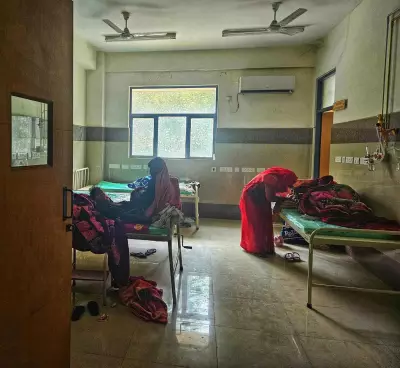
The Odisha government has taken a firm stance against the ongoing agitation by government doctors by enforcing a stringent law that prohibits strikes in essential services. This move comes as a direct response to the doctors' protest, which has disrupted outpatient services across the state for weeks.
Government Invokes Essential Services Act
On Tuesday, the state administration officially invoked the Odisha Essential Services (Maintenance) Act (ESMA). This order, which will remain valid for the next six months, legally bars doctors associated with the Odisha Medical Service Association (OMSA) from participating in any strike action. The act's provisions apply to all medical personnel and staff working in government healthcare facilities.
Doctors' Demands and Escalating Protest
The core of the dispute lies in the doctors' longstanding demands. The OMSA is pushing for the implementation of the central government pay scale and the abolition of level-15 for medical officers, a reform already granted to Class-1 officers. To press their case, the doctors have been engaged in a phased protest.

Their agitation began on December 26 last year, with doctors abstaining from OPD and National Health Mission duties for one hour daily. This action was escalated on Monday, with the OPD services being halted for two hours in public health centres statewide.
Stalemate and Threats of Further Action
While State Health Minister Mukesh Mahaling has appealed to the doctors to call off their strike and assured them that the government is reviewing their demands, the OMSA leadership remains unconvinced. Sanjib Kumar Pradhan, the general secretary of OMSA, has warned that if the government fails to provide a satisfactory solution, the association will extend the daily OPD strike to four hours.
Reacting sharply to the ESMA order, Pradhan argued that the law is intended for situations where emergency services are affected. He emphasized that the protesting doctors have deliberately kept all emergency services operational and are only impacting routine OPD work. He stated that the two-hour OPD strike would continue as it does not critically hamper healthcare services.
"We are giving yet another opportunity to the state government to reconsider our demands. If there is no positive response, we will consider seeking intervention of the court," Pradhan declared, indicating a potential legal battle ahead if the deadlock persists.