Nutritional Aid Fails TB Patients as India Misses 2025 Elimination Target
When Fatima, a 30-year-old resident of Mumbai's Govandi area, was diagnosed with drug-resistant tuberculosis in January last year, her doctors emphasized that consistent medication and proper nutrition were non-negotiable for her survival. She trusted the central government's Nikshay Poshan Yojana, which promised Rs 1,000 monthly for nutritional support, and provided her bank details to health workers. However, that trust was soon broken.
Apart from two transfers of Rs 3,000 each in March and June, Fatima was left to fight the debilitating disease on an empty stomach for half the year. Her story is not unique. In Mumbai alone, 39,164 tuberculosis patients were left without their promised nutritional support throughout 2025—India's self-imposed deadline for TB elimination. Shockingly, only 9,800 patients received their dues during this period.
A Broken Promise with Dire Consequences
A TB specialist from Govandi, who has collaborated with top officials on policy initiatives, revealed the grim reality: "We now tell patients in the early stages of treatment that the money will eventually reach them, but we clarify there is no telling when." This uncertainty adds immense psychological and financial stress to patients already battling a life-threatening disease.

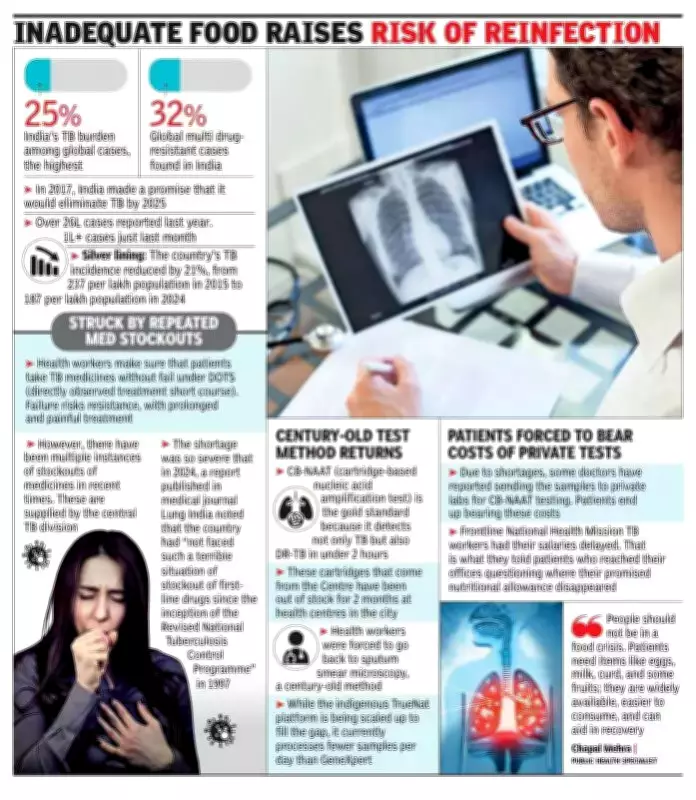
Launched in 2018, the Nikshay Poshan Yojana represented a crucial acknowledgment that adequate food intake is essential for successful TB treatment. Initially set at Rs 500 per month, the nutritional support was increased to Rs 1,000 last year. According to the Central TB Division's latest data, 1.38 crore TB patients nationwide have received Rs 4,453 crore since the scheme's inception.
However, during the same period, 1.64 crore patients were diagnosed with TB, leaving over 26 lakh individuals excluded from the nutritional support program. India reported an equivalent number of fresh TB cases last year alone, highlighting the persistent challenge.
Personal Tragedies Amid Systemic Failures
Soham, a 29-year-old Thane resident, represents another face of this systemic failure. Diagnosed with multi-drug resistant TB in 2022, he stopped receiving his nutritional support after requesting a change in his bank details. Standard drug-sensitive TB treatment lasts six months, while DR-TB treatment can extend to 18-24 months. Although newer regimens have shortened DR-TB treatment to 6-9 months, they are not yet universally available and cannot be administered to extra-pulmonary TB cases.
India reports approximately 1.3 lakh drug-resistant TB cases annually, with 15-20% of all TB cases being extra-pulmonary. By 2023, Soham's condition had progressed to extensively drug-resistant TB. "I admitted myself to Sewri TB Hospital. The treatment and food there helped," he recalled. Discharged in April at 56kg, his lung function was severely compromised.
The financial strain on his family became so severe that Soham could not afford adequate nutrition after discharge. By October, he suffered a reinfection, and his weight plummeted to 52kg. As of recent reports, he weighs just 46kg and has developed resistance to 13 vital drugs, including bedaquiline. In December, his mother was also diagnosed with DR-TB, compounding the family's crisis.
The Human Cost of Nutritional Neglect
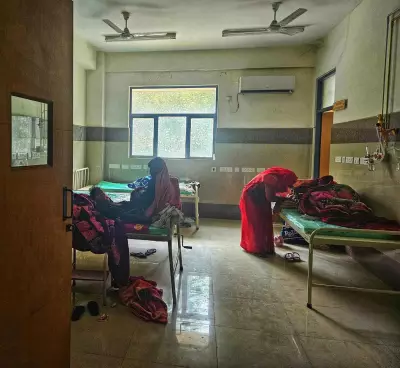
For Fatima, the monthly Rs 1,000 would have meant basic sustenance. "There is not much one can do with it, but I would have got at least some groceries, eggs and milk," she said. Living in a 200-square-foot, poorly ventilated home in Govandi's slums, she supports two young children while her father's tailoring job brings in just Rs 15,000 monthly. Most days, she is too weak to move, unable to take her elder child to school.
Public health specialist Chapal Mehra, convenor of Survivors Against TB, emphasized that the entire premise of NPY was to provide patients access to basic nutritional sources. "Loss of pay due to illness is common. It was straightforward: People should not be in a food crisis. Patients need items like eggs, milk, curd, and some fruits; they are widely available, easier to consume, and can aid in recovery." Mehra and other experts had advocated for at least Rs 2,000 as monthly support.

Questioning the Nutritional Support Framework
Dr. Anurag Bhargava, whose landmark 2021 RATIONS trial proved nutrition's critical role in TB outcomes—leading WHO to revise its global guidelines last year—questioned the government's rationale for the nutritional amounts. "India's effort to provide such assistance to TB patients is likely the largest in the world. There are challenges in implementation which need to be addressed urgently. The timeliness, the amount that is distributed needs a relook, which is likely happening at a national level."
An ICMR-National Institute of Epidemiology study involving over 3,000 TB patients found that while most received NPY funds at least once, delays frequently exceeded three months. Patients who did not receive support were significantly more likely to experience poor treatment outcomes.
Fatima has already spent over Rs 50,000 on her illness, having been initially misdiagnosed with typhoid. Her weight dropped from 54kg at the start of treatment to 50kg by mid-year. With India's 2025 TB elimination target now passed, questions arise about the 2030 goal under sustainable development objectives.
A Daunting Path Forward
Pulmonologist Dr. Lancelot Pinto from Hinduja Hospital offered a sobering assessment: "We are nowhere close to meeting those goals. As long as there is overcrowding, increasing pollution—newer evidence links poor air quality and TB—and issues such as medicine stockouts and lack of nutritional allowance persist, TB is here to stay."
The implementation gaps in the Nikshay Poshan Yojana, combined with environmental and socioeconomic factors, create a perfect storm that threatens to derail India's TB elimination ambitions. Without urgent corrective measures, thousands more patients like Fatima and Soham will continue to suffer, their recovery jeopardized by empty promises and empty stomachs.