

Nagpur Division Accounts for 75% of Maharashtra's Lymphatic Filariasis Cases
The Nagpur division has emerged as the epicenter of lymphatic filariasis in Maharashtra, contributing nearly 75% of the state's active cases of this debilitating vector-borne disease. This alarming statistic highlights a persistent public health challenge in eastern Maharashtra, despite ongoing mass drug administration and elimination campaigns.
Chandrapur District Emerges as Worst-Affected Region
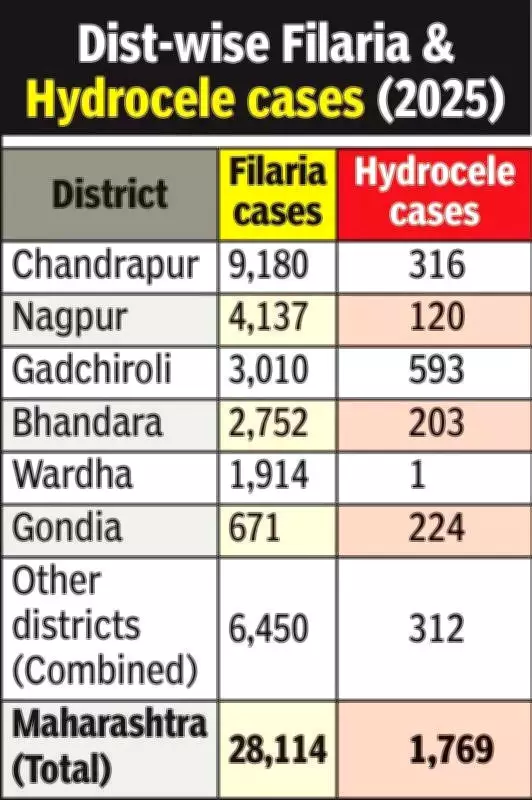
According to district-wise data compiled by the Maharashtra state health department for the period between January and December 2025, Chandrapur district alone reported a staggering 9,180 filaria cases. This makes it the single largest contributor to the disease burden in the entire state, underscoring the severity of the situation in this region.
Across the Nagpur division as a whole, health authorities recorded 21,664 filaria cases during the last calendar year. Of these patients, 1,457 are suffering from hydrocele, a chronic and debilitating manifestation of the disease that causes severe swelling.

Other High-Burden Districts in Nagpur Division
While Chandrapur represents the most severe hotspot, several other districts within the Nagpur division also report significant caseloads:
- Nagpur district reported 4,137 cases
- Gadchiroli recorded 3,010 cases
- Bhandara documented 2,752 cases
- Wardha reported 1,914 cases
- Gondia recorded 671 cases
These figures collectively illustrate the concentrated nature of the filaria burden in eastern Maharashtra, with the Nagpur division bearing the overwhelming majority of cases.
Health Officials Clarify Disease Transmission Status
State health officials have provided important clarification regarding these reported cases. They emphasize that the patients included in these statistics are no longer active transmitters of lymphatic filariasis, having progressed beyond the transmission stage of the disease.
"These are chronic cases detected over time through our surveillance systems," explained a senior health department official. "While they accurately reflect the historical disease burden in these regions, they do not pose a risk of further transmission to the community."
The patients are suffering from either lymphedema or elephantiasis—conditions characterized by swelling caused by damage or blockage of the lymphatic system. Elephantiasis represents an advanced, severe form of chronic lymphedema that typically causes significant swelling in the legs.
Continued Focus on Prevention Through Mass Drug Administration
Health authorities stress that preventing new infections remains their top priority. "Our primary focus continues to be on mass drug administration programs designed to interrupt disease transmission," the health official stated. "These preventive measures are crucial for protecting unaffected populations and moving toward eventual elimination of lymphatic filariasis in Maharashtra."
The persistence of these chronic cases serves as a sobering reminder of the long-term impact of filarial infections and underscores the importance of sustained public health interventions in affected regions.






