

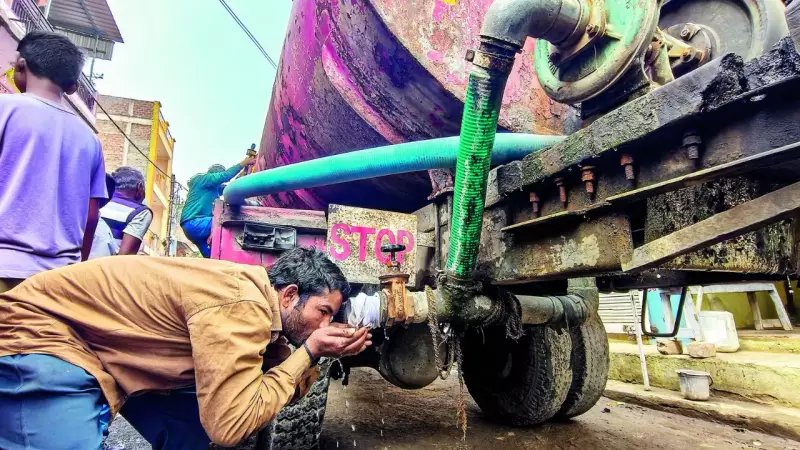
A recent nationwide assessment has exposed a severe drinking water crisis in rural Madhya Pradesh, with more than a third of samples failing safety standards. The findings gain grim significance in the wake of the tragic deaths of ten people in Indore, linked to contaminated water supplied by the urban administration, and revelations that pollution warnings from years ago were not acted upon.
Alarming Numbers from the Jal Jeevan Mission Survey
The Union government's Functionality Assessment of Household Tap Connections 2024, conducted under the Jal Jeevan Mission, covered 15,094 rural households in Madhya Pradesh between September and October 2024. The report, released last month, delivered a shocking verdict: 36.7% of the drinking water samples collected were not potable.
Water samples were gathered from two households per source and tested in NABL-accredited labs for parameters including E. Coli and total coliform, with on-site checks for pH levels. The situation in Indore district was particularly dire, with only 33% of surveyed rural households receiving safe drinking water, a level officials termed "below acceptable."

The survey highlighted a stark district-wise disparity:
- Alirajpur, Barwani, Jhabua, Narsinghpur, and Sidhi reported 100% availability of potable water.
- Anuppur, Dindori, Panna, Rewa, and Umaria recorded zero potable samples.
- Major districts like Gwalior (20.9%), Ashoknagar (21.9%), Morena (25.2%), and Ujjain (35.3%) reported very low levels of safe water.
- Bhopal (56.9%) and Jabalpur (54.3%) were close to the halfway mark.
Systemic Failures and Unheeded Warnings
Beyond water quality, the survey flagged critical operational gaps. About 23.4% of households did not receive a regular tap water supply, and 36.7% did not have functional taps at the time of the survey. While only 3.7% expressed dissatisfaction with quality, nearly 22% said the quantity was inadequate, suggesting safety issues may be under-reported by consumers.
These systemic failures are mirrored in the tragedy at Indore's Bhagirathpura. A 2016-17 report by the Madhya Pradesh Pollution Control Board (MPPCB) had explicitly flagged sewage contamination at Bhagirathpura and 58 other locations across the city. The study, which tested samples from borewells and hand pumps, found total coliform levels exceeding 10 MPN per 100ml in nearly all samples.
Scientists involved stated this clearly indicated faecal contamination from sewage ingress into groundwater. "At this level, the water is unfit for human consumption," a retired scientist said. The PCB formally communicated these findings to the Indore Municipal Corporation (IMC), recommending declaring the sources unsafe and installing warning boards.
Lives Lost to Known Dangers
The recent deaths in Bhagirathpura have now revived painful questions about why these documented warnings, which identified persistent sewage contamination in areas with old pipelines and poor drainage, failed to translate into sustained corrective action. The incident underscores a dangerous gap between identifying public health risks and implementing solutions on the ground.
The combined evidence from the 2024 national survey and the 2017 state report paints a concerning picture of water security in Madhya Pradesh. It reveals not only widespread contamination but also a troubling history of ignored data and delayed action, with devastating consequences for public health.






