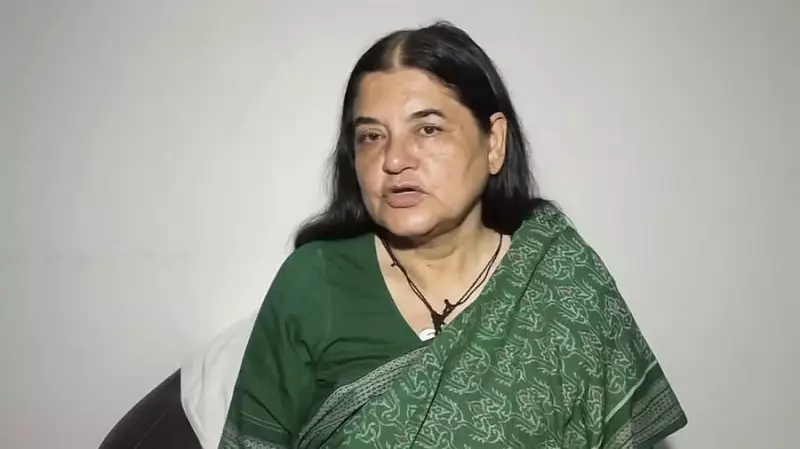
In a powerful and controversial statement, former Union Minister and BJP leader Maneka Gandhi has called for a nationwide prohibition on firecrackers. She has also taken a hardline stance by branding individuals who burst firecrackers as "anti-national," citing the severe impact of their actions on public health and the environment.
A Stern Stance Against Pollution
Maneka Gandhi's comments were made public on January 4, 2026. She argued that the widespread use of firecrackers during festivals and celebrations significantly deteriorates air quality, leading to a public health crisis. Her statement underscores a growing concern over the toxic smog that envelops many Indian cities, particularly after Diwali.
"Those who burst firecrackers should be branded as 'anti-national' because everyone is suffering from their activities," Gandhi asserted. This strong terminology frames the act not just as a personal choice or a cultural practice, but as a direct action against the well-being of the nation and its citizens.
The Rationale Behind the Ban Demand
The push for a nationwide ban on firecrackers is rooted in the urgent need to check escalating air pollution levels. Gandhi's position highlights several key points:
- Public Health Emergency: The hazardous air quality leads to respiratory illnesses, especially affecting children, the elderly, and those with pre-existing conditions.
- Collective Suffering: Her statement emphasizes that the consequences of a few people's actions are borne by the entire population.
- National Responsibility: By labeling the act as "anti-national," she places the onus of environmental protection on patriotic duty.
This call adds significant weight to an ongoing national debate, where environmental concerns often clash with traditional practices.
Implications and the Path Forward
Maneka Gandhi's demand is likely to reignite discussions on balancing cultural heritage with environmental sustainability. While several states and the National Green Tribunal (NGT) have imposed restrictions on the sale and use of firecrackers in the past, a uniform, country-wide ban has not been implemented.
Her provocative label of "anti-national" is set to spark intense political and social discourse. It challenges citizens to reconsider the environmental cost of celebrations and positions air pollution control as a non-negotiable national priority. The statement, made in early 2026, sets a bold agenda for the year, pushing the issue to the forefront of public policy discussions.
As India continues to grapple with some of the world's worst air quality, such high-profile interventions are crucial for driving change. Whether this leads to legislative action or a broader shift in public consciousness remains to be seen, but the conversation has been decisively framed in terms of national duty versus individual action.