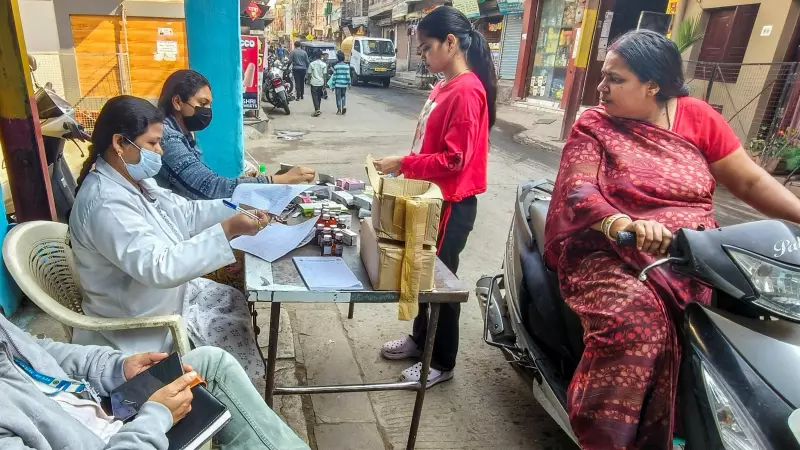
Indore, a city celebrated for its cleanliness and repeatedly crowned as India's cleanest, now faces a severe public health crisis that starkly contradicts its sparkling image. A devastating waterborne disease outbreak in the Bhagirathpura area has resulted in loss of lives and widespread illness, exposing critical failures in the city's water supply monitoring and civic accountability mechanisms.
The Unfolding of a Public Health Emergency
The first warnings came in mid-December 2025, when residents of Bhagirathpura began reporting an unusual foul smell, a bitter taste, and visible discolouration in their municipal drinking water. Despite repeated complaints to the Indore Municipal Corporation (IMC), no immediate action was taken. The consequences were swift and severe. Soon after consuming the contaminated water, a large number of people developed symptoms of vomiting, diarrhoea, high fever, and dehydration, leading to panic and a rush to local hospitals.
Official sources have confirmed that the outbreak has led to 10 fatalities and the hospitalisation of over 200 individuals. Independent media reports suggest the actual impact may be even higher. Laboratory tests conducted by the Health Department confirmed bacterial contamination in the water supply, with pathogens known to cause severe gastrointestinal distress identified in the samples.

Systemic Failure and Judicial Intervention
The source of the contamination was traced to a leak in a main drinking water pipeline located near a police outpost in Bhagirathpura. The pipeline was reportedly close to a toilet structure, allowing sewage to seep into the water supply. The affected section has since been isolated, repaired, and disinfected.
Taking serious note of the incident, the Madhya Pradesh High Court intervened on December 31, 2025. A Division Bench comprising Justice Rajesh Kumar Gupta and Justice B P Sharma described the situation as a "grave public health emergency". The court noted that the authorities' failure to act on repeated complaints amounted to an alleged violation of Article 21 of the Constitution, which guarantees the right to life and health. The HC issued interim orders directing the IMC to ensure immediate supply of clean, potable water and instructed the state government to guarantee the best possible medical treatment for all affected persons.
Aftermath, Accountability, and the Path Forward
In response to the tragedy, authorities announced an ex-gratia compensation of Rs 2 lakh for the families of the deceased and assured that the government would cover all medical expenses. The IMC also took disciplinary action, suspending a zonal officer and an assistant engineer, and dismissing a sub-engineer in-charge for negligence.
As an immediate relief measure, around 20 water tankers were deployed to supply safe drinking water. Health officials have advised residents to avoid tap water, use boiled or tanker water, maintain strict hygiene, and seek immediate medical help if symptoms appear.
This crisis has laid bare a reactive and casual approach to water management, where citizen complaints, routine testing, and preventive maintenance were neglected. The breakdown highlights poor inter-departmental coordination and weak field-level accountability. Experts argue that addressing these deep-seated issues requires institutional reforms, not temporary fixes. Key measures must include:
- Regular and publicly disclosed water quality testing.
- A time-bound grievance redressal system.
- Independent safety audits of water infrastructure.
- Clearly defined responsibility at every operational level.
As the High Court continues to monitor the case, rebuilding public trust will hinge on whether authorities can transition to a preventive, accountable, and citizen-centric water governance framework. The outbreak in India's cleanest city serves as a grim reminder that true cleanliness and public safety demand robust systemic integrity far beyond mere appearance.