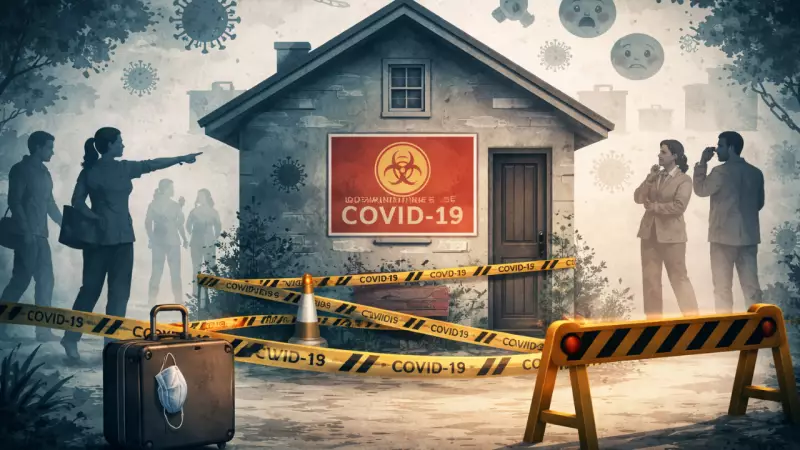
For countless Indians who battled and recovered from COVID-19 during the pandemic's initial surge, the end of the infection was not the end of their ordeal. A significant nationwide study has uncovered that fear and social stigma shadowed survivors long after they tested negative, resulting in severe consequences like ostracization, loss of livelihood, and deep psychological trauma.
The Moral Judgement of a Health Crisis
The multicentric research, conducted by experts from the Indian Council of Medical Research (ICMR) and partner institutes and published in Discover Public Health on December 31, 2025, details how the fear of the virus rapidly transformed into harsh moral judgment. Individuals who tested positive were frequently viewed not merely as a health hazard but as being culpable for introducing the disease into their communities.
This stigmatization often engulfed entire families, who were informally branded as "corona households," a label that persisted even after recovery. Dr. Rajesh Sagar, Professor of Psychiatry at AIIMS, emphasized that stigma was a critical challenge in the pandemic's early stage, directly impacting whether people got tested or revealed their illness. He noted that public marking of homes and neighborhoods amplified fear, driving people to conceal symptoms.

Lived Experiences of Exclusion and Economic Hardship
The qualitative study spanned 18 districts across seven states: Assam, Delhi, Madhya Pradesh, Maharashtra, Odisha, Tamil Nadu, and Uttar Pradesh. Between September 2020 and January 2021, researchers spoke with 223 individuals, including 87 COVID-19 survivors and 136 community members.
Those who recovered described being shunned by neighbors, barred from social gatherings like weddings, or voluntarily withdrawing from public life to avoid scorn. For many, this rejection lasted months, despite having medical certificates declaring them virus-free.
Official containment strategies, while necessary, inadvertently worsened the stigma. Houses marked with stickers, barricaded lanes, and frequent visits by health officials turned a private medical condition into a public spectacle, fueling gossip and extending social boycotts well beyond the required isolation period.
Unequal Impact and Barriers to Healthcare
The study highlighted that the burden of stigma was not evenly distributed. Domestic workers, street vendors, and daily-wage laborers were among the worst hit, frequently losing their jobs or clientele. Poorer households faced longer periods of boycott, whereas wealthier families often received more sympathy. In certain districts, minority communities reported being singled out for blame.
Beyond financial ruin, survivors grappled with anxiety, depression, and guilt, with women particularly prone to blaming themselves for transmitting the virus to relatives. The dread of stigma led some to hide symptoms or avoid testing altogether, undermining efforts to control outbreaks. Stigma also infiltrated healthcare settings, with patients recalling instances of excessive distancing and humiliating treatment from staff.
Dr. Sagar pointed out that people with pre-existing mental health conditions endured a double stigma—for both COVID-19 and their mental illness—which further discouraged them from seeking help. He observed that while stigma lessened with vaccination and awareness during later waves, it remained a persistent obstacle to care and disease control.
The research concludes that stigma is not an unavoidable byproduct of epidemics but a serious public health barrier. It advocates for stigma-sensitive medical care, strict protection of patient confidentiality, and active support for community reintegration to be central pillars of future health emergency responses.