

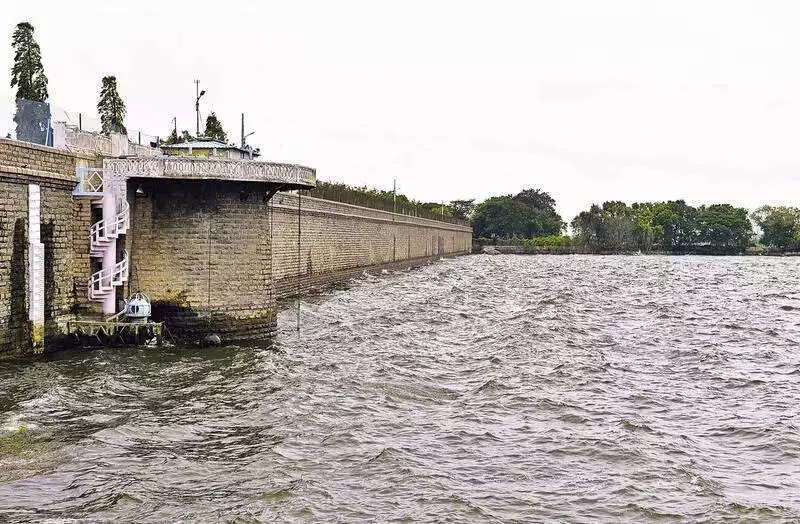
Following the tragic deaths in Indore linked to contaminated water, a new focus has been placed on water quality across India. In a disturbing revelation for Hyderabad, recent studies by premier academic institutions have found that four out of the city's six major drinking water sources are critically polluted. These sources collectively supply about 80% of Hyderabad's daily drinking water needs.
Alarming Contamination in Key Reservoirs
Hyderabad currently draws approximately 600 million gallons per day (MGD) from six sources: Osmansagar, Himayatsagar, Singur, Manjeera, Akkampally (Krishna), and Sripada Yellampalli (Godavari). While Manjeera and Singur remain relatively clean, the other four show severe contamination from sewage, faecal coliform bacteria, and industrial effluents.
Disaster management expert K M Lakshmana Rao stated this situation makes the city vulnerable to a public health disaster. "This is a serious issue as it makes the city a sitting duck for an Indore-like tragedy," he warned. Rao emphasized that while the government focuses on basic filtration and chlorination, advanced bio-chemical processes are needed to neutralize complex pollutants in these reservoirs.

Osmansagar: A Major Red Flag
The condition of Osmansagar is particularly critical. A September 2025 study titled 'Assessment of Water Quality of Osmansagar' by Maulana Azad National Urdu University (MANUU) researchers found the water quality index to be 'very poor'. The lake shows alarmingly high levels of faecal bacteria and heavy metals.
The primary reasons are untreated sewage from nearby residential areas and effluents from surrounding industries. The study also highlighted contamination from pesticides and fertilizers used in adjacent agricultural fields. It recommended stricter regulation of local industries and public education on waste disposal to plug the contamination gaps.
Krishna and Godavari Under Industrial Stress
A March 2025 report by the National Institute of Technology (NIT) Warangal pinpointed industrial clusters in Telangana—including pharmaceutical units and synthetic chemical plants—as major polluters of the Krishna river. The Nagarjunasagar stretch, from where water is pumped to Hyderabad, was identified as a key affected area.
Similarly, a joint study by the National Environmental Engineering Research Institute (NEERI) and IIT-Hyderabad found untreated wastewater being discharged directly into the Godavari river from Ramagundam and Mancherial. The Sripada Yellampalli project, which supplies about 162 MGD of Godavari water to Hyderabad, lies downstream of these pollution sources, raising serious concerns about source-level contamination.
Ageing Infrastructure Amplifies the Risk
Beyond source pollution, experts warn that Hyderabad's ageing pipeline network significantly increases the risk of cross-contamination. Anant Maringanti, director of Hyderabad Urban Lab, explained that frequent leakages, corroded pipes, and the proximity of water lines to sewer networks create a constant danger. "With invisible cracks and weak joints, contamination can occur anywhere, anytime. This is not a hypothetical risk—it is a real and present danger," he stated.
Official Response and Assurance
Officials from the Hyderabad Metropolitan Water Supply and Sewerage Board (HMWSSB) have sought to allay public fears. D Sudarshan, HMWSSB's director (technical), assured that raw water quality issues are addressed at the treatment stage. "Pollutant levels are controlled at reservoirs and treated thoroughly at water treatment plants. We collect nearly 5,000 water samples daily for quality checks," he said, emphasizing that chlorination is done properly and water undergoes rigorous testing before supply.
However, the stark findings of multiple independent studies underscore an urgent need for comprehensive action to safeguard Hyderabad's water supply from source to tap, preventing a potential public health catastrophe.






