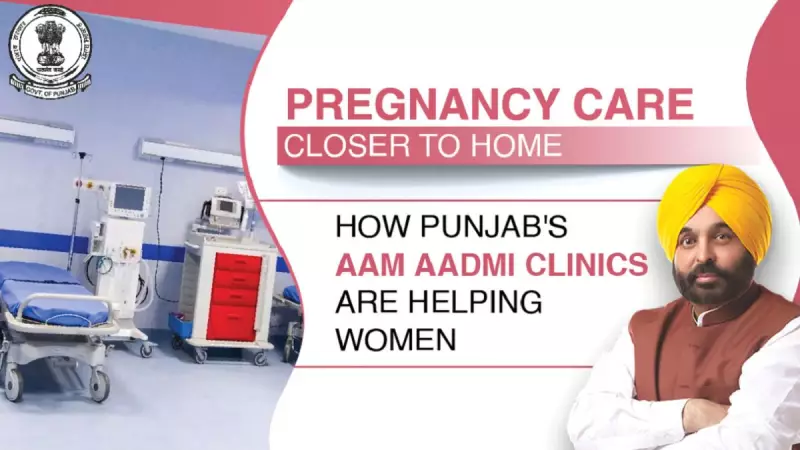
In a significant boost to maternal healthcare in Punjab, the state's network of Aam Aadmi Clinics (AAP Clinics) is bringing comprehensive pregnancy care directly to women's doorsteps. This initiative is ensuring that essential antenatal services are no longer a privilege of urban centers but a accessible right for women across the state.
A Network of Care: Bringing Services to the Community
The model is simple yet revolutionary. Instead of expecting pregnant women to travel long distances to crowded district hospitals, the government has strategically placed over 600 Aam Aadmi Clinics in urban and rural areas. Since their inception, these clinics have provided pregnancy-related care to more than 150,000 women, a testament to their reach and necessity.
At the core of this service are the Mid-Level Service Providers (MLSPs), specially trained nurses who form the backbone of primary healthcare delivery at these clinics. They conduct initial assessments, manage basic antenatal care, and act as a crucial link to higher-level facilities when needed.

Comprehensive and Free Antenatal Services
The range of services offered at these clinics is designed to cover the fundamental needs of a healthy pregnancy. Every visit includes a suite of free tests, eliminating a major financial barrier for countless families. The standard package includes:
- Blood pressure monitoring
- Hemoglobin tests to check for anemia
- Blood sugar tests
- Urine analysis for protein and sugar
Beyond diagnostics, the MLSPs provide vital counseling on nutrition, rest, and danger signs during pregnancy. They also facilitate the distribution of iron and folic acid supplements, which are critical for preventing birth defects and maternal anemia. Perhaps one of the most impactful services is the free ultrasound facility provided once during the pregnancy at these clinics, a service that often comes with a high cost in private settings.
Real Impact: Easing the Burden on Women and Families
The success of this initiative is not just in numbers but in the lived experiences of women. The article highlights the story of Manpreet Kaur, a resident of Mohali, who represents thousands of beneficiaries. For her, the clinic in Phase 7, Mohali, became a convenient and reliable source of care.
"Getting regular check-ups during my pregnancy became effortless," she noted, emphasizing how the clinic's proximity spared her the exhausting trips to a distant civil hospital. This convenience is a game-changer, encouraging more women to seek timely and regular care, which is essential for positive pregnancy outcomes.
The clinics operate as an efficient triage and support system. While they handle routine care and monitoring, they are integrally linked to the broader healthcare network. In cases requiring specialist attention, such as high-risk pregnancies, the MLSPs promptly refer patients to secondary or tertiary care centers, ensuring a continuum of care without delay.
A Model for Accessible Public Health
The Punjab government's focus on strengthening primary healthcare through the Aam Aadmi Clinics is showing clear results in the realm of maternal health. By decentralizing services, the program addresses critical issues of access, cost, and equity. It empowers women by placing essential care within their communities, supported by trained and empathetic personnel.
This model demonstrates that a well-organized primary healthcare system can significantly reduce the burden on overcrowded hospitals while improving preventive care. As the network continues to serve a growing number of women, it sets a precedent for other states to follow in making pregnancy care truly universal, dignified, and close to home.