In the heart of Uttar Pradesh, a quiet revolution against tuberculosis is unfolding, led not by distant policymakers but by village heads at the grassroots. The 'TB Mukt Panchayat' campaign, launched in 2023, has transformed the fight against the disease, turning community action into a powerful tool for public health.
From Divine Wrath to Community Action
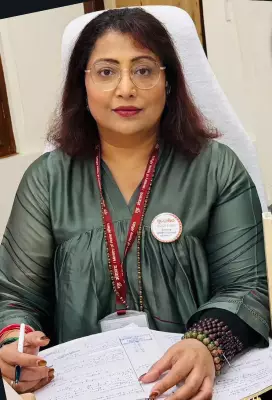
Armun Nisha, the young village head (pradhan) of Amkotwa village in Lakhimpur Kheri district, remembers a time when tuberculosis was shrouded in fear and misconception. "My relatives used to describe TB as a wrath of God," she recalls, noting how the illness often plunged families into financial despair. This perception began to shift when she assumed leadership. "When I became the village pradhan, I realised it was no wrath of God, but a malady accentuated by sheer ignorance," Nisha states. Her enlightenment propelled her to be among the first to pledge to make her village a 'TB Mukt Panchayat,' a goal she successfully achieved in March 2024.
Nisha's story is not an isolated one. She is part of a massive movement comprising 20,000 village pradhans across Uttar Pradesh who have actively worked to eliminate TB from their communities since the campaign's inception. The results are staggering: in its first year (2023), 1,372 villages were declared TB-free. This number jumped to 7,191 villages in 2024, and in 2025, a remarkable 12,500 villages have achieved TB-free status. The official declaration for the 2025 achievements will be made on World TB Day observed in March.
The Pillars of Success: Community Ownership and Local Leadership
Dr. Pinky Jowel, MD of the National Health Mission in Uttar Pradesh, outlines the key reasons behind the campaign's impressive success. "First, community participation ensures early detection of disease, treatment adherence improves, and stigma reduces significantly," she explains. The second pillar is local ownership, which transforms health programs from government mandates into a collective responsibility. "Third, community-led campaigns deliver quicker results and ensure long-term sustainability," Dr. Jowel adds. She emphasizes that communities continue to monitor, support patients, and protect health gains even after formal interventions scale down, creating a replicable template for other health initiatives.
Village head Armun Nisha confirms this multiplier effect. "After we became TB-free, the same template was followed for TB surveillance. So, when I see symptoms, I ask people to get tested immediately. The method is used for other health programmes as well, particularly vector-borne diseases," she shares, highlighting the sustainable model created.
The Backbone of a TB-Free India
Dr. Shailendra Bhatnagar, a state TB officer, underscores the critical importance of grassroots action. "TB-Mukt Panchayats are the backbone of India's mission to end TB," he asserts. "They translate national policy into local action—identifying patients early, ensuring treatment completion, and breaking stigma through community leadership." He argues that when villages take ownership of TB elimination, health systems gain public trust, treatment gaps narrow, and prevention becomes embedded in the community fabric. "A TB-Mukt Bharat can only be achieved when every panchayat becomes a partner in the fight against TB," Dr. Bhatnagar concludes.
The 'TB Mukt Panchayat' initiative stands as a certified village council that achieves and sustains a tuberculosis-free status through a triad of community surveillance, consistent treatment support, and relentless awareness drives. This bottom-up approach, championed by thousands of local leaders like Armun Nisha, is proving to be a game-changer in India's ambitious quest to eradicate tuberculosis.