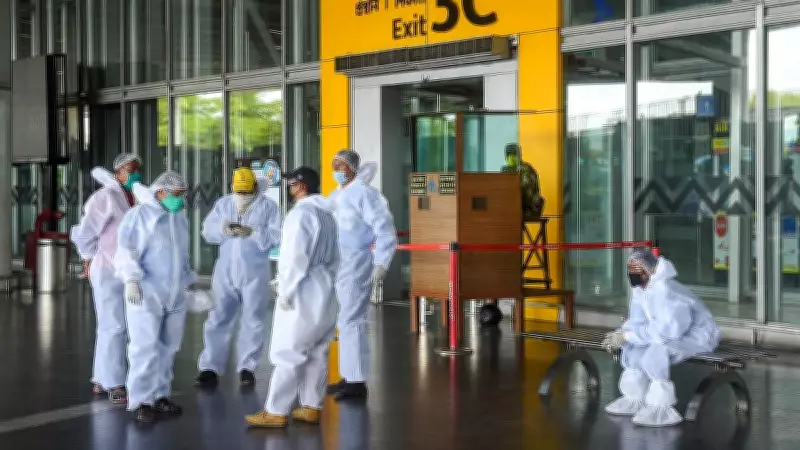
The Union Health Ministry has launched a dedicated portal to enhance surveillance for Ebola virus disease at airports across India, according to an official statement. The portal aims to strengthen real-time monitoring and reporting of travelers arriving from Ebola-affected countries, ensuring rapid response to potential cases.
Portal Features and Implementation
The portal, developed by the National Centre for Disease Control (NCDC), enables health officials at airports to digitally record and track travelers' health status. It integrates with the Bureau of Immigration to capture passenger details from affected regions. The system allows for immediate alerts and coordination with state health departments for follow-up.
India has 19 designated airports with health desks, including major hubs like Delhi, Mumbai, Chennai, Kolkata, Bengaluru, and Hyderabad. The portal will streamline data entry and reduce manual paperwork, improving efficiency in surveillance.

Context and Preparedness
The launch comes amid heightened global vigilance following Ebola outbreaks in Uganda and the Democratic Republic of Congo. While no case has been reported in India, the ministry emphasized proactive measures. "The portal will significantly boost our ability to monitor and contain any potential importation of the virus," a health ministry official said.
India has previously dealt with Ebola threats during the 2014-2016 West Africa outbreak, where it implemented screening at airports. The new portal digitizes and centralizes that process.
Training and Response Protocols
Health personnel at airports have been trained to use the portal. They can record symptoms, travel history, and contact details of travelers. Suspected cases would be isolated and samples sent to the NCDC or designated labs for testing. The Integrated Disease Surveillance Programme (IDSP) will coordinate state-level responses.
"The portal ensures that every traveler from an Ebola-affected country is tracked for 21 days, the incubation period of the virus," the official added. This aligns with WHO guidelines.
Broader Surveillance Efforts
The ministry also highlighted that the portal is part of a larger digital health initiative under the National Health Mission. Similar portals exist for other diseases like COVID-19 and monkeypox. The Ebola portal can be adapted for future health emergencies.
India's airport health desks handle over 10 million international travelers annually. The portal's data will help in risk assessment and resource allocation.