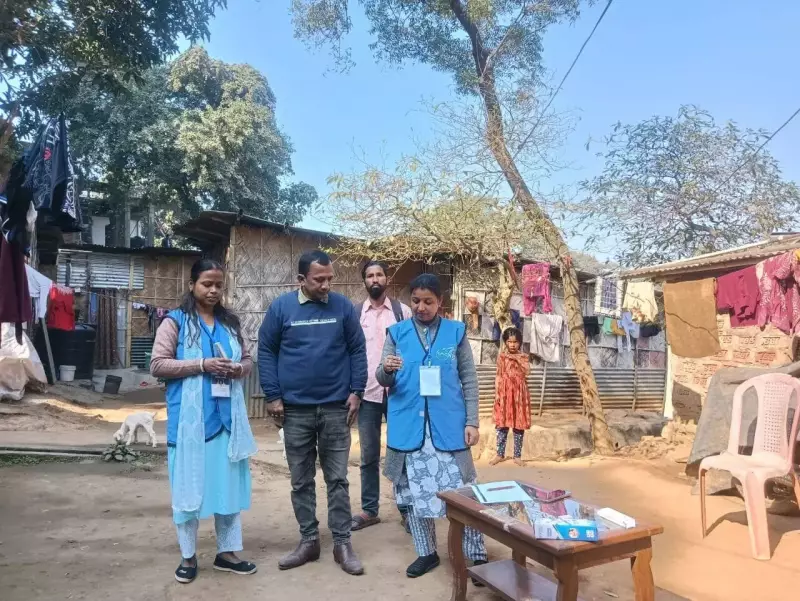
In a significant move to safeguard public health, the Guwahati Jal Board has initiated an extensive, special drive to test drinking water quality across all District Metered Areas (DMAs) in the city's South Central zone. This proactive campaign, launched on Friday, aims to strengthen monitoring mechanisms and reinforce public trust in the municipal water supply system following a recent water contamination incident in Indore.
Drive Details and Preventive Goals
The special testing initiative commenced on Friday and is scheduled to continue until January 12. It specifically targets the South Central zone, which currently comprises 100 DMAs supplying water to approximately 53,000 households. Nayanjyoti Bhagawati, Secretary of the Guwahati Metropolitan Drinking Water and Sewerage Board, clarified that while routine tests are conducted as per standard norms, this drive is an additional preventive and confidence-building measure.
Officials emphasized that the core objective is to ensure the safety and health of consumers by conducting a precise, household-level examination of the water quality. This approach allows for a more accurate assessment of the water actually being consumed, enabling authorities to address any concerns promptly and effectively.

On-Ground Execution by Trained Teams
The execution of this large-scale drive involves a collaborative effort. Trained Jal Sakhis, working alongside DMA engineers, are visiting homes across the city to perform the tests. These Jal Sakhis have received proper training in water testing procedures and the use of standard testing kits, allowing them to conduct accurate assessments under the technical supervision of engineers.
The focus is on strengthening real-time monitoring and enabling the early detection of any potential issues with water quality. As part of the protocol, random sample tests will be conducted in each DMA, covering about 10 to 12 households per area.
Comprehensive Testing Parameters and Public Disclosure
The tests conducted during this special drive will check for several critical parameters to ensure water safety. The key factors being analyzed include:
- pH levels
- Total Dissolved Solids (TDS)
- Water turbidity
- Bacteriological parameters
In addition to the on-site tests, water samples will be systematically collected from each DMA and sent to laboratories for more detailed analysis. The results from these lab tests are expected to be available within five to six days, and officials have committed to announcing the findings to the public, ensuring transparency.
This initiative by the Guwahati Jal Board represents a crucial step in proactive civic management, directly responding to public health concerns and aiming to fortify the reliability of the city's essential water supply infrastructure.