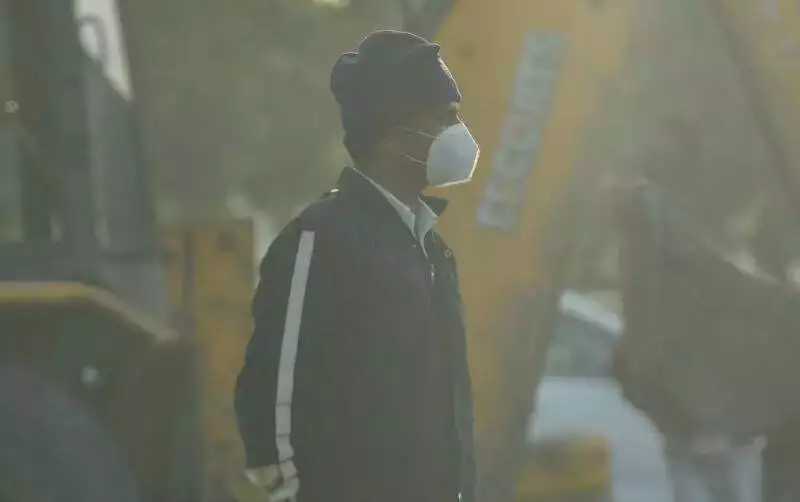
Gurgaon's air quality took a sharp turn for the worse on Friday, slipping into the 'very poor' category after spending two days in the 'poor' bracket. The city's overall Air Quality Index (AQI) was recorded at a concerning 373, according to official monitoring data.
Monitoring Stations Paint a Grim Picture
Data from the four active monitoring stations in the city revealed a widespread pollution problem. The situation was most critical at the Sector 51 station, which logged 'severe' air quality with an AQI of 415. The other three stations also reported hazardous readings. Gwalpahari recorded an AQI of 375, Vikas Sadan reported 359, and Teri Gram stood at 346, all firmly in the 'very poor' range.
Persistent PM2.5 Problem and Health Advisory
The dominant pollutant across all stations was PM2.5, indicating that fine particulate matter continues to be the primary driver of Gurgaon's winter air crisis. Except for a brief dip on January 2, when levels fell to 187, PM2.5 concentrations have remained in the 'poor' to 'severe' range every day. Recent peaks included 312 on January 1 and 333 on January 4. Even on relatively better days like January 7 and 8, levels hovered close to 300, far above safe limits.

Authorities have issued a health advisory in response to the dangerous conditions. Prolonged exposure at these AQI levels can aggravate respiratory and cardiovascular conditions. The risks are particularly high for sensitive groups, including children, the elderly, and individuals with pre-existing health issues. According to CPCB guidelines, an AQI between 301-400 ('very poor') significantly increases the likelihood and intensity of adverse health impacts.
Winter Weather and Outlook
Meteorological conditions typical of winter, which trap pollutants close to the ground and limit their dispersion, are a major contributing factor to the elevated pollution levels across the National Capital Region (NCR). Experts warn that air quality is likely to remain unstable in the coming days unless sustained changes in wind patterns help clear the polluted air effectively.
In a related development, Delhi experienced its coldest January night in two years on Friday, with the minimum temperature plunging to 4.6 degrees Celsius. This season's lowest temperature so far was two degrees below normal, creating a dense, cold air layer that exacerbates pollution accumulation.