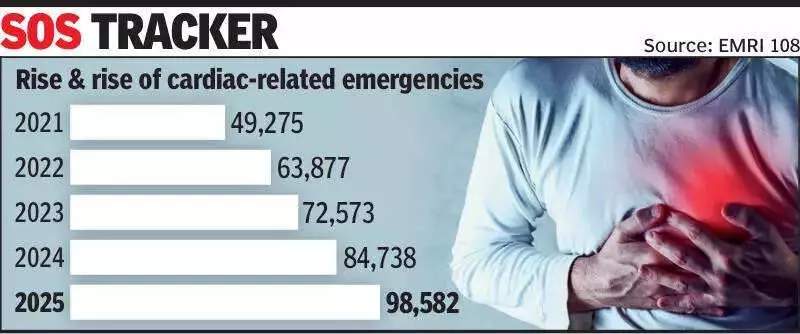
Gujarat has witnessed an alarming and unprecedented surge in cardiovascular emergencies, with the state's emergency medical service reporting its highest-ever annual tally in 2025. The EMRI 108 service, a critical lifeline for medical crises, recorded a staggering 98,582 emergencies related to heart or cardiovascular health in the year. This figure marks the highest number since the service began its operations in the state back in 2007.
A Disturbing Daily Average and a Sharp Annual Rise
Breaking down the annual total reveals a grim daily reality. The 2025 figure translates to an average of approximately 270 cardiac emergencies every single day, or roughly one such crisis every six minutes. The year-on-year trend is particularly concerning. To put the 2025 numbers in perspective, the service handled 72,573 cardiac emergencies in 2023 and 84,738 in 2024. This indicates a consistent and sharp annual increase of 16-17% in this critical category.
Furthermore, the spike in heart-related calls was the most pronounced among all emergency categories for EMRI in 2025. While overall emergency cases rose by 5%, cardiac emergencies surged by 16%. This outpaced increases in other major categories like non-vehicular trauma (12%) and abdominal pain (10%).

Urban Centers Bear the Brunt: Ahmedabad Tops the List
A closer look at the data from Gujarat's four major metropolitan cities shows a heavy concentration of cases. Ahmedabad recorded the highest number at 27,297 cardiac emergencies. It was followed by Surat with 8,071 cases, Rajkot with 6,074, and Vadodara with 5,135 cases. Collectively, these four urban hubs accounted for a substantial 47% of the total cardiac emergencies registered across the state, highlighting a significant urban health challenge.
Experts Point to Lifestyle and Post-Pandemic Factors
Medical professionals in Gujarat link this worrying trend directly to the rising tide of lifestyle-related diseases. City-based experts emphasize that the figures must be viewed in the context of increasing prevalence of conditions like diabetes, hypertension, and obesity.
Dr. Sibasis Sahoo, Professor of Cardiology at the UN Mehta Institute of Cardiology and Research Centre, noted a steady rise in cardiovascular cases since the Covid-19 pandemic due to multiple factors. "Today we see the rise in cases across categories — be it men, women, young, or old. A sedentary lifestyle and unhealthy food choices are major factors," he stated. Dr. Sahoo also highlighted a past trend of rising heart attacks at relatively younger ages, a pattern that continues to cause concern.
Dr. Kamal Sharma, a noted interventional cardiologist based in Ahmedabad, offered a nuanced perspective. He suggested that the increase in reported cases among younger individuals is also acting as a warning sign, prompting others to seek help earlier. "What has changed is primarily the rise in awareness through health check-ups, which often helps detect the issues early," Dr. Sharma explained. He also acknowledged that the widespread availability and reliability of the EMRI 108 service itself is a factor, as more people now trust and utilize the system during a health scare.
The record-breaking data from EMRI 108 serves as a stark reminder of Gujarat's growing cardiovascular disease burden. It underscores an urgent need for public health initiatives focused on preventive care, lifestyle modification, and continued awareness to curb this escalating crisis.