

A recent water quality advisory from the Uttar Pradesh Pollution Control Board (UPPCB) has delivered a grim verdict on the state of the Gomti River flowing through Lucknow. The report, based on November data, concludes that the river water within the city limits fails to meet safety standards, posing a severe threat to aquatic life and public health.
From Pristine to Poisoned: A River's Urban Journey
The UPPCB findings paint a clear picture of deterioration as the Gomti traverses the urban landscape. The water quality, which begins in a relatively acceptable state upstream, degrades significantly due to the continuous discharge of untreated and partially treated sewage from the city.
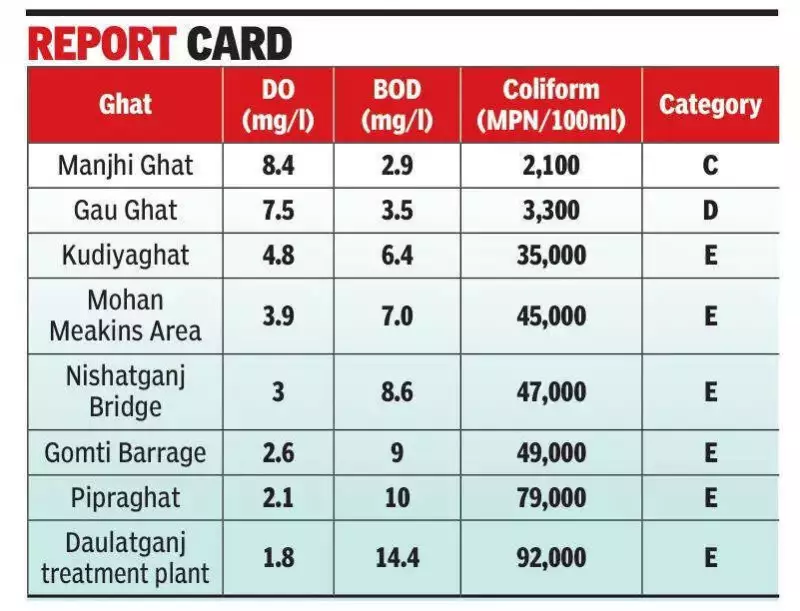
Upstream at Manjhi ghat, the river showed promising signs with a dissolved oxygen (DO) level of 8.4 mg/l and a biochemical oxygen demand (BOD) of 2.9 mg/l, making it suitable for outdoor bathing. However, this picture changes dramatically as the river passes through densely populated areas, with oxygen levels crashing and pollution soaring near drains and discharge points.

Critical Zones and Alarming Parameters
The most severe contamination was recorded downstream of the Daulatganj sewage treatment plant (STP) near Bhainsakund. Here, the vital dissolved oxygen, crucial for fish and other aquatic organisms, was measured at a mere 1.8 mg/l, far below the normal range of 6.4 to 8.2 mg/l.
Simultaneously, the biochemical oxygen demand (BOD), an indicator of organic pollution, skyrocketed to 14.4 mg/l against a safe limit of below 3 mg/l. "Such levels indicate heavy organic pollution," the report underscores. Under the Central Pollution Control Board (CPCB) classification, several locations including Kudiyaghat, Nishatganj bridge, Gomti barrage, and Pipraghat fell into the lowest 'E' category, meant only for controlled waste disposal.
Professor Venkatesh Dutta of Babasaheb Bhimrao Ambedkar University explained the dire implications. "Low DO makes it difficult for aquatic organisms to survive, while high BOD shows the presence of sewage that consumes oxygen in the water," he stated. The report also flagged dangerously high levels of faecal coliform, confirming contamination from human or animal waste.
Long-Term Systemic Failures and Official Response
Experts emphasize that the November sampling, conducted in a non-monsoon month, points directly to chronic urban discharge issues rather than seasonal run-off. River expert Professor Dhruvsen Singh identified the pattern as symptomatic of long-term failures in sewage management and drainage infrastructure.
According to the advisory's designated best-use classification, several stretches of the Gomti within Lucknow are not fit for drinking even after conventional treatment. Professor Dutta added that the faecal contamination could alter the nutrient balance and light penetration in the water, further disrupting aquatic ecosystems.
In response to the findings, Rakesh Mathpal, Project Director (SUEZ) for One City One Operator in Lucknow, addressed the specific mention of the Daulatganj STP. He stated that after receiving UPPCB's communication regarding parameter fluctuations in October, a detailed review was conducted.
"Effluent quality was monitored through NABL-accredited external testing, online monitoring linked to UP Jal Nigam (Urban), and in-house analysis, all of which showed parameters within prescribed limits," Mathpal asserted. He claimed no operational deviations were found and suggested minor variations could be due to sampling differences. To ensure transparency, joint sampling with the UPPCB has been proposed, with a commitment to full regulatory compliance.
The UPPCB report serves as a stark reminder of the ongoing environmental challenge facing Lucknow's lifeline river, highlighting the urgent need for sustained and effective intervention to restore its health.






