Health officials in Ghaziabad have confirmed the presence of coliform bacteria in twenty-six water samples collected from various locations across the district. This discovery follows last month's water contamination deaths in Indore and raises serious concerns about public health safety in Ghaziabad.
Extensive Testing Reveals Contamination
Officials collected water samples from three hundred and twenty different sites throughout Ghaziabad district. They tested borewells, hand pumps, water coolers, schools, hospitals, household connections, and residential storage tanks. Out of all these samples, twenty-six showed contamination with coliform bacteria.
District surveillance officer Dr. RK Gupta stated clearly that all twenty-six contaminated samples have been declared unsafe for drinking. The presence of coliform serves as a key indicator of sewage contamination in the water supply.

Immediate Actions Ordered
Authorities have instructed all departments and agencies responsible for water supply in the affected areas to take corrective measures immediately. These actions include disinfection of water sources, repairs to pipelines, and protection of groundwater sources from further contamination.
Dr. Gupta explained that coliform bacteria presence points directly to sanitation lapses. It suggests possible seepage of sewage into drinking water pipelines or groundwater sources that supply the district.
Affected Areas Identified
The contamination has been detected in multiple locations across Ghaziabad. In Loni, affected areas include Rajiv Garden and Sangam Garden. Modinagar's Begamabad and Devendrapuri also show contamination.
Other affected neighborhoods include parts of Siddharth Vihar, Shastri Nagar, Nandgram, Vijay Nagar, and Krishna Nagar. Samples from Jankpuri in Shalimar Garden, Pahladgarhi, Daulatpura, and Kotgaon in Arya Nagar have also tested positive for coliform bacteria.
Special Monitoring Implemented
Following these findings, authorities have placed several vulnerable localities under special monitoring. This includes areas that have reported cases of water-borne diseases in recent months. Officials warn that even limited contamination can affect a large number of people, making vigilance essential.
The contaminated samples represent about eight percent of those tested. While this percentage might seem small, health officials emphasize that any contamination poses significant risks to community health.
A Continuing Problem
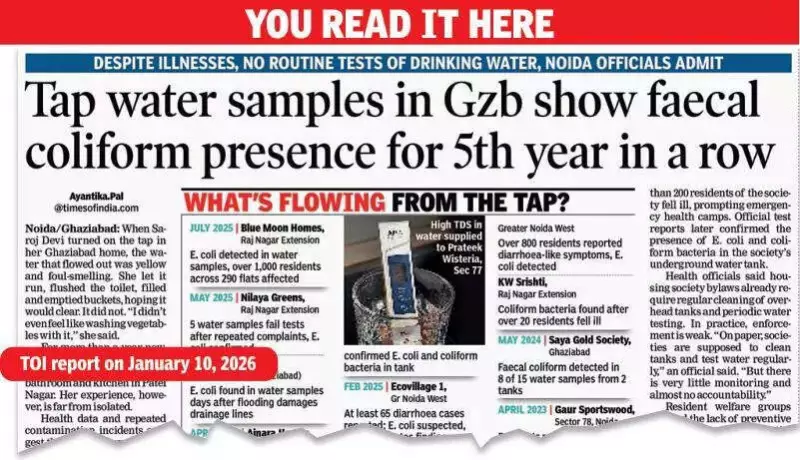
These latest test results reflect a worrying long-term trend for Ghaziabad's water quality. A report published earlier this year noted that drinking water samples in the district have shown presence of faecal coliform for five consecutive years.
In 2025, testing revealed that five hundred thirty-nine out of two thousand three samples failed to meet prescribed quality standards. This represents approximately twenty-seven percent of tested samples, indicating a persistent problem with water safety in the region.
Health officials continue to monitor the situation closely. They urge residents in affected areas to take precautions with their drinking water until corrective measures are fully implemented and retesting confirms safety.