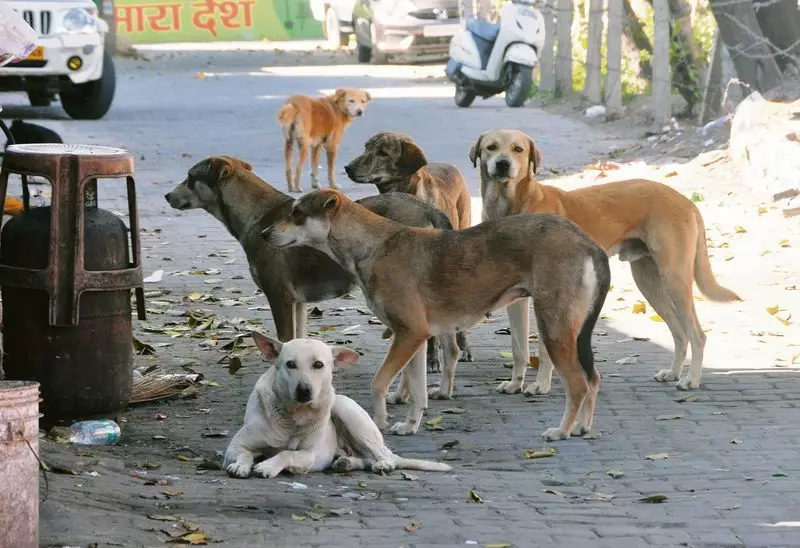
The national capital is grappling with a severe and multifaceted crisis caused by its burgeoning population of stray dogs. Beyond the well-documented public health threat of dog bites, these free-roaming animals are now emerging as a significant cause of road accidents, creating a complex challenge for authorities and residents alike.
A Dual Threat: Bites and Traffic Hazards
Recent data paints a alarming picture. In the first few months of 2024 alone, hospitals in Delhi have reported more than 5,000 cases of dog bites. This staggering number underscores a persistent public health emergency, with citizens, especially children and the elderly, living in constant fear of attacks in parks, streets, and even near their homes.
However, the danger extends beyond direct physical attacks. A disturbing new trend has come to light: stray dogs are increasingly contributing to road accidents. Instances of two-wheeler riders losing control after colliding with or swerving to avoid dogs are becoming more frequent. Experts directly link this rise in accidents to the unchecked growth of the stray dog population, which leads to more animals foraging on roads and medians, particularly near garbage dumps and food waste sites.
Root Causes and Systemic Failures
The core of the problem lies in failed population control and poor waste management. The Municipal Corporation of Delhi's (MCD) Animal Birth Control (ABC) program, designed to sterilize and vaccinate stray dogs, has been operating far below capacity. Sources indicate that only 20-25% of the target for sterilizations is being met. This inefficiency allows the dog population to grow exponentially.
Compounding the issue is the city's perennial struggle with garbage disposal. Overflowing bins and littered streets provide a ready and abundant food source for strays, sustaining and attracting more dogs to public spaces. "The synergy between open garbage and the stray dog population is undeniable," stated one civic official. The situation is particularly acute in outer Delhi zones and unauthorized colonies where waste management is most lax.
Public Anger and the Call for Solutions
The public's patience is wearing thin. Residents' welfare associations and citizen groups are voicing their frustration louder, demanding immediate and effective action from the MCD. The current scenario of fear and hazard is no longer seen as acceptable.
Authorities acknowledge the crisis. The MCD has admitted that the ABC program needs a massive overhaul and acceleration. Proposed solutions include:
- Significantly ramping up the sterilization drive to meet annual targets.
- Improving coordination with NGOs and animal welfare groups to expand capacity.
- Launching public awareness campaigns on responsible waste disposal and not feeding strays in hazardous locations.
- Ensuring stricter enforcement of waste management rules to cut off the food supply that sustains large dog packs.
The Path Forward: Humane and Effective Management
The consensus among experts is clear: a lasting solution requires a balanced, humane, and multi-pronged strategy. Simply removing or culling dogs is neither legal under Indian law nor effective in the long term. The focus must be on sustained, high-volume sterilization to curb population growth at its source, coupled with robust waste management to remove the attractants.
The Delhi High Court has also been actively monitoring the situation, pushing civic bodies to comply with animal welfare rules while ensuring public safety. The coming months will be critical. The success or failure of Delhi's efforts to control the stray dog menace will serve as a crucial test case for other Indian metros facing similar escalating problems, where public health and safety must be balanced with compassionate animal welfare policies.