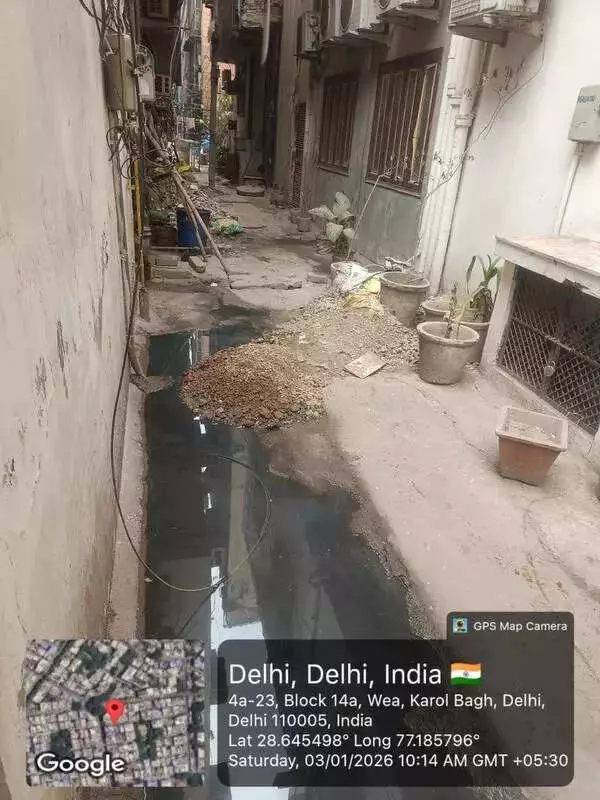
Residents across multiple areas of the national capital are raising alarms over visibly contaminated and foul-smelling tap water, sparking serious concerns about a looming public health emergency. The complaints, highlighting issues from suspended dirt to an off-putting odor, have poured in from north, central, and south Delhi, with Resident Welfare Associations warning of a potential crisis akin to the recent Indore incident if no permanent solution is found.
Widespread Complaints and Temporary Fixes
Presidents and members of several residents' associations in Model Town, Vasant Kunj, Karol Bagh, Azad Market, and Burari have reported receiving visibly polluted water. Atul Goyal, president of United Residents Joint Action of Delhi, stated that this is a recurring annual problem in several localities. He specifically warned that "another Indore is in the making in central Delhi, including Karol Bagh," with residents continuing to get malodorous water despite repeated complaints.
Sanjay Singh, president of the Model Town RWA, echoed these frustrations, noting that complaints from Blocks C and D are lodged almost daily. He alleged that while some action is taken each time an issue is raised, the solutions provided are only temporary. Officials have pointed to unsafe ammonia levels in the Yamuna river, ageing water pipelines, and damaged sewer lines as primary culprits. The leakage from old infrastructure allows sewage to mix with the drinking water supply, severely degrading its quality.

Residents' Plight and Official Response
Sunita Sharma, a resident of Model Town-III, described the contaminated water supply as a persistent nightmare. "Apart from water that appears dirty, its supply is inadequate. We are forced to buy bottled water, use purifiers, or boil water. The situation is extremely hazardous, especially for children," she said. Ashok Bhasin, president of the North Delhi Residents Welfare Federation, confirmed that complaints are flooding in from areas like Old Delhi, Burari, Sadar Bazar, Patel Nagar, and Krishna Nagar, with only stop-gap measures being offered in response.
In the wake of reports linking several deaths to water contamination in Madhya Pradesh, Delhi's Water Minister Parvesh Verma issued strict guidelines, ordering zero tolerance towards drinking water pollution. All pending and new complaints are to be resolved on a priority basis, with a two-day deadline set for existing cases. Complaints unresolved since April 1, 2025, are to be listed and addressed through immediate planning.
Intensified Measures and Monitoring
The directives include intensifying the cleaning of sewer lines using super sucker, recycler, and desilting machines across all divisions, with daily monitoring and reporting mandated. The Delhi Technical Quality Control will conduct rigorous water sampling in houses, schools, and hospitals, submitting daily reports to senior officials. A dedicated monitoring cell will track all complaints, including those highlighted by the media and on social media. The order warns that any negligence or delay by staff will invite strict disciplinary action.
The Delhi Jal Board (DJB) stated that it receives complaints daily and aims to resolve each within three days. A DJB official assured that all cases are being examined fairly, with efforts underway to address residents' hardships. Similarly, the Municipal Corporation of Delhi (MCD) claimed it has intensified water quality monitoring, conducting sampling wherever issues are reported and addressing any problems detected.
New Delhi Municipal Council (NDMC) chairman Keshav Chandra announced on Wednesday that water testing has been stepped up in areas under its jurisdiction. "At least 45 samples are being collected daily and none has failed the test so far," he said, adding that long-term measures like replacing leaking pipelines and separating sewers from stormwater drains are being prioritized. The NDMC requires 225 million litres of water daily to cater to nearly 22,000 consumers in its areas.