

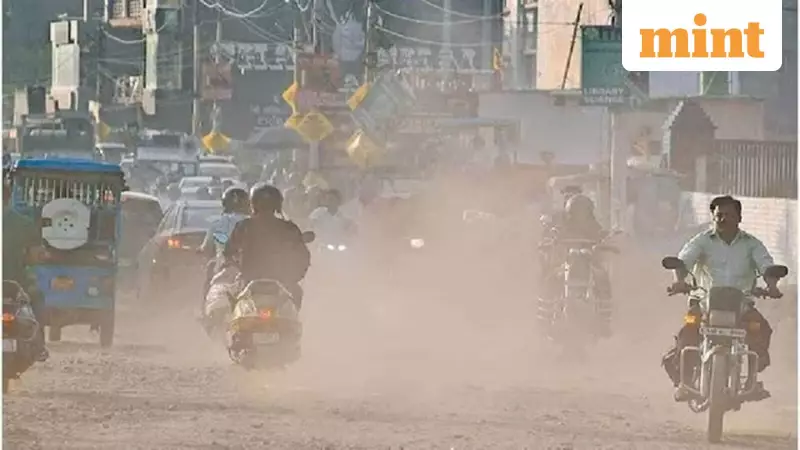
Delhi's air quality continued to languish in the 'very poor' category on Saturday, December 20, with little respite in sight. The city's Air Quality Index (AQI) was recorded at 376 in the early hours, showing a marginal deterioration from the 374 noted on Friday.
Fog Alert and Grim Forecast for the Weekend
Officials have warned that dense fog is likely to further degrade the capital's air over the weekend. This prediction comes despite the active enforcement of stringent pollution-control measures. The India Meteorological Department (IMD) has issued a yellow alert for fog, specifically forecasting dense fog conditions for Saturday.
Weather experts indicate that as winter intensifies, foggy conditions are expected to persist during the early mornings for the next several days. This meteorological phenomenon traps pollutants closer to the ground, significantly hampering air quality.

When Will Delhi's Air See Improvement?
According to Shambhavi Shukla, Programme Manager at the Centre for Science and Environment in New Delhi, residents will have to wait for a substantial improvement. She stated that air quality is likely to begin improving from February and March onwards.
"The air quality is not good, but better than what is happening right now," Shukla explained. She added that the best air quality is typically witnessed post-monsoon, from July-end and August onwards, when rains effectively wash away pollutants.
Science Behind Pollution and Winter Fog
Shukla clarified the link between weather and pollution. She explained that rain causes particulate matter to settle down. Currently, the air contains a mix of fog (water droplets and moisture) and harmful particulate matter like PM10 and PM2.5. During the monsoon, rainfall washes off pollution from the air, leading to clearer skies.
A recent study titled 'Role of meteorology and air pollution on fog conditions over Delhi during the peak winter 2024' sheds light on this persistent winter problem. The research found that foggy conditions prevailed for 46 percent of the time during the study period in January 2024.
The study identified several factors that combine to create Delhi's toxic winter haze:
- High relative humidity and a shallow boundary layer.
- Stable weather conditions, including the absence of strong surface winds.
- The presence of cold wave to severe cold wave conditions.
- Temperature inversion (up to 4 °C), poor ventilation, and high concentrations of PM10 and PM2.5.
These severe air pollution and foggy conditions present significant public health hazards and continue to disrupt daily life in the national capital every winter.






