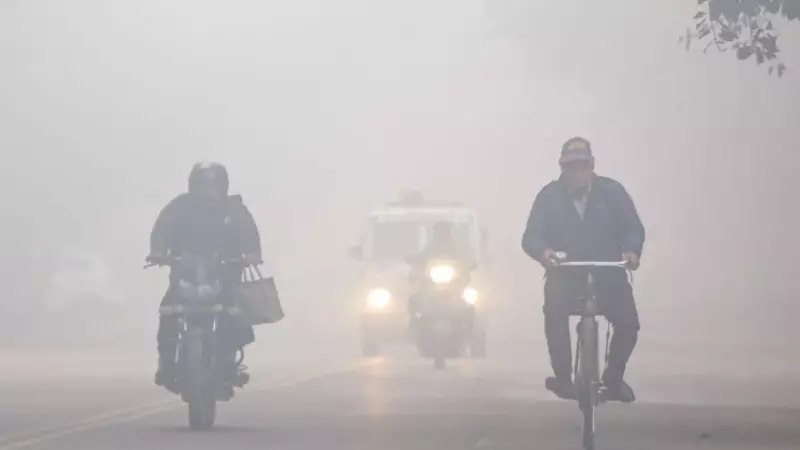
In a significant development for the National Capital Region, air quality authorities have rolled back the most stringent anti-pollution curbs following a marked improvement in pollution levels. The Commission for Air Quality Management (CAQM) announced on Friday, January 2, 2026, the immediate revocation of all restrictions imposed under Stage-3 of the Graded Response Action Plan (GRAP).
What Prompted the Decision?
The decision came after a rapid review by the CAQM's GRAP Sub-Committee, triggered by a notable drop in the Air Quality Index. Official data showed the AQI had fallen significantly from 380 on Thursday to 236 by 4 pm on Friday. This placed the air quality in the 'poor' category, a substantial shift from the previous day when levels had soared into the 'severe' zone, touching a worrying 633 during peak hours.
While the current AQI of 236 remains hazardous to health, the consistent downward trend and forecasts allowed the panel to conclude that the criteria for invoking the 'Severe' air quality stage were no longer met. The revocation of Stage-3 is effective immediately across Delhi and the wider NCR.
GRAP Stage-3: What is Now Lifted?
Stage-3 of GRAP is activated when the AQI is projected to enter, or has entered, the 'severe' range (401-500). Its revocation means the following stringent measures are no longer mandatory:
- A halt on most construction and demolition activities that generate dust.
- Strict bans on the entry of certain categories of polluting trucks and commercial vehicles.
- Enforced closures or restrictions on specific industrial operations with high emissions.
These measures, enforced by agencies like the Delhi Pollution Control Committee, are designed for rapid emission cuts during critical pollution episodes.
Which Restrictions Continue Under GRAP Stage-1 and Stage-2?
Critically, the region is not completely free from restrictions. The CAQM has emphasized that all actions prescribed under Stage-1 and Stage-2 of GRAP will remain in force until further orders. This ensures a baseline of pollution control continues.
Key ongoing measures under Stage-I include:
- Ensuring uninterrupted power supply to discourage diesel generator use.
- Heavy traffic management at key intersections to reduce congestion.
- Public awareness campaigns via media on pollution levels and health advisories.
- Boosting public transport services, including CNG/electric buses and metro frequency.
Additional measures under Stage-II that are still active:
- Implementation of staggered office timings for government and municipal offices in Delhi-NCR to decongest roads.
- Daily mechanized sweeping and water sprinkling on roads with dust suppressants.
- Increased parking fees to deter private vehicle usage.
The CAQM's graded approach means that as air quality deteriorates or improves, stages are added or removed accordingly, but measures from lower active stages persist. Authorities will continue to monitor the situation closely, and the public is advised to stay updated on official channels for any further changes to the plan.