

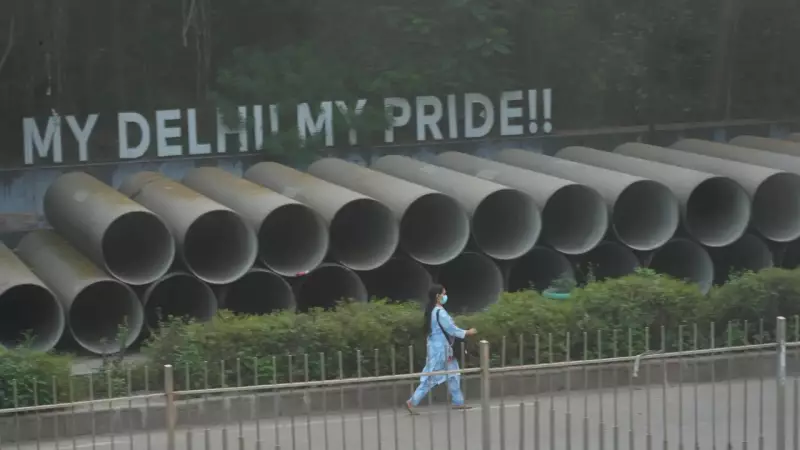
Delhi Enters 'Red Zone' as Air Quality Turns Severe
The national capital witnessed a significant deterioration in air conditions on Saturday as the air quality index crossed the 400-mark, pushing Delhi into the 'red zone' and creating adverse conditions for residents across the city and surrounding regions.
Pollution Hotspots and Regional Impact
According to the latest data from the Central Pollution Control Board, Delhi recorded a 24-hour average AQI of 361, making it the second most polluted city in the country. Several specific areas reported even more alarming numbers, with Wazirpur reaching 420, Burari at 418, and Vivek Vihar hitting 411 - all falling into the 'severe' pollution category.
The pollution crisis extended beyond Delhi's boundaries, affecting the entire National Capital Region. Neighboring cities including Noida (354), Greater Noida (336), and Ghaziabad (339) also reported hazardous air quality levels, highlighting the widespread nature of the smog emergency.

Forecast and GRAP 3 Status
The air quality early warning system for Delhi has predicted that the city's air will remain in the 'very poor' category for the coming days. Since the Diwali celebrations, the capital's air quality has consistently fluctuated between 'poor' and 'very poor', with occasional dips into 'severe' territory.
Despite the worsening conditions, the Graded Response Action Plan (GRAP) stage 3 has not been enforced. The Delhi Pollution Control Committee explains that this November's air quality has shown improvement compared to the same period last year, with pollution levels not yet reaching the threshold that would trigger Stage 3 restrictions.
Official Response and Improvement Measures
Officials credit the relative improvement to coordinated efforts across multiple departments. "Out of the last seven days, six have recorded better air quality than the corresponding days last year," an official told PTI, emphasizing that this progress resulted from timely and well-coordinated actions.
The preventive measures include intensified dust control operations, enhanced road cleaning, anti-smog campaigns, and stricter monitoring of vehicle and industrial emissions. These efforts have collectively helped delay the need for implementing harsher pollution control measures under GRAP Stage 3.
Last year, authorities imposed GRAP Stage 3 restrictions on November 13. This year, officials express hope that with continued departmental cooperation and public support, the city might avoid reaching that critical stage entirely.






