

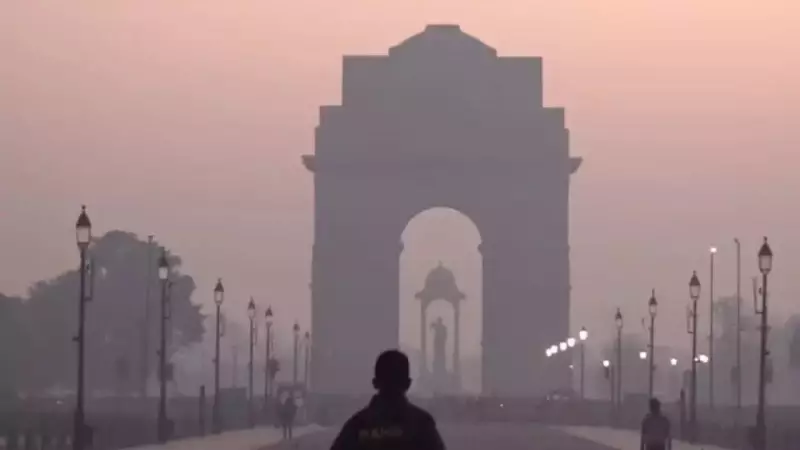
New Delhi grappled with another day of unhealthy air on Tuesday, as a thick layer of smog settled over the city, reducing visibility and raising health concerns. The overall Air Quality Index (AQI) for the national capital was recorded at 288, firmly placing it in the 'poor' category, according to real-time data from the Central Pollution Control Board's (CPCB) SAMEER application.
City Shrouded, Airport Operations Affected
A significant reduction in visibility was reported around the Indira Gandhi International (IGI) Airport due to the dense smog. In response to the challenging conditions, the airport authorities confirmed that flight operations were being conducted under CAT III protocols, which are designed for low-visibility landings. Despite this, the airport warned passengers about possible delays and disruptions. In a post on social media platform X, Delhi Airport advised travelers to contact their respective airlines for the most current flight information, stating that both arrivals and departures were ongoing.
Pollution Levels Vary Across Delhi
Air pollution was not uniform across the city. Interestingly, the AQI in the immediate vicinity of the airport was measured at 180, which falls in the 'moderate' category as per CPCB data. However, other key areas reported worse conditions. At the busy ITO intersection, the AQI was recorded at 281, also in the poor range. This patchy distribution highlights the localized nature of pollutant accumulation.

Winter Conditions Trap Pollutants
Experts have attributed the persistent poor air quality to typical winter conditions. Low wind speeds and cooler temperatures prevent the dispersion of pollutants, allowing them to accumulate near the ground level. This phenomenon creates a hazardous environment, particularly for vulnerable groups. Children, the elderly, and individuals with pre-existing respiratory or cardiovascular ailments are at heightened risk and are advised to limit prolonged outdoor exposure and wear protective masks when necessary. The situation underscores the ongoing environmental challenge faced by Delhi during the winter months.






