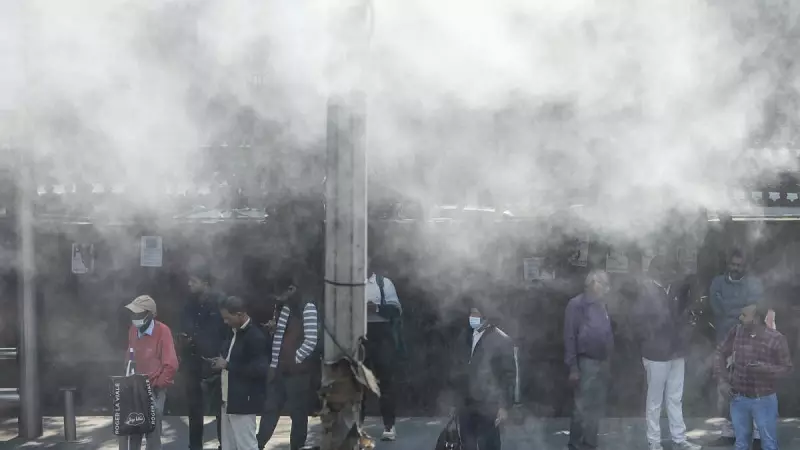
The Congress party has launched a sharp critique of the Narendra Modi-led central government, demanding it officially acknowledge the severe public health crisis unfolding across India due to toxic air pollution. The opposition's call to action comes in the wake of alarming statements from leading medical authorities about the life-threatening impact of polluted air.
A Political Call for Recognizing the Emergency
Jairam Ramesh, the Congress General Secretary, spearheaded the attack. He pointedly referenced recent comments by Dr. M. Srinivas, the director of the prestigious All India Institute of Medical Sciences (AIIMS) in Delhi. Dr. Srinivas had explicitly described the situation as a "public health emergency," highlighting the direct link between deteriorating air quality and a surge in respiratory and other health problems.
Ramesh accused the Modi administration of being in a state of "denial" regarding the gravity of the crisis. He argued that the government's failure to formally declare a health emergency is a major obstacle to mobilizing a comprehensive, nation-wide response commensurate with the scale of the threat. The Congress leader emphasized that such a declaration is crucial for prioritizing resources and implementing stringent, immediate measures.
The Medical Community's Stark Warnings
The political demand is firmly rooted in growing concern from the healthcare sector. Doctors from AIIMS and other major hospitals have consistently reported a significant increase in patients suffering from pollution-related ailments. These include exacerbated asthma, chronic bronchitis, lung infections, and cardiovascular issues.
The core of the warning from AIIMS Director Dr. M. Srinivas is that air pollution is not merely an environmental issue but a direct and potent threat to human health, affecting millions of citizens daily. Medical experts stress that children, the elderly, and those with pre-existing conditions are particularly vulnerable to the harmful effects of pollutants like PM2.5 and PM10.
This healthcare perspective adds immense weight to the political appeal, framing air pollution as an urgent national health priority that requires transparency and decisive leadership from the central government.
Implications and the Path Forward
The Congress's move places the issue of air pollution squarely in the political arena, challenging the government's narrative and policy approach. By demanding an official declaration of a public health crisis, the opposition seeks to force a more aggressive and legally mandated action plan.
The implications of such a declaration could be far-reaching, potentially unlocking emergency funds, mandating stricter enforcement of industrial and vehicular emission norms, and accelerating the shift to cleaner energy sources. It would also formally place the onus on multiple government departments to coordinate their response under a single, health-focused directive.
As northern India, particularly the National Capital Region (NCR), braces for another season of hazardous smog, the pressure is mounting on the Centre to move beyond incremental steps. The call from the Congress, backed by medical authority, underscores a critical question: when will the government treat air pollution with the same seriousness as any other life-threatening national emergency? The coming weeks will reveal whether this political and public health challenge triggers a new level of governmental acknowledgment and action.