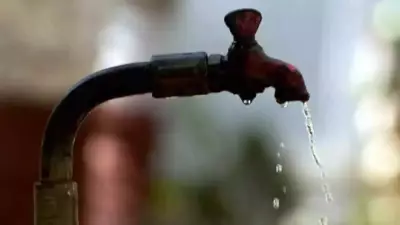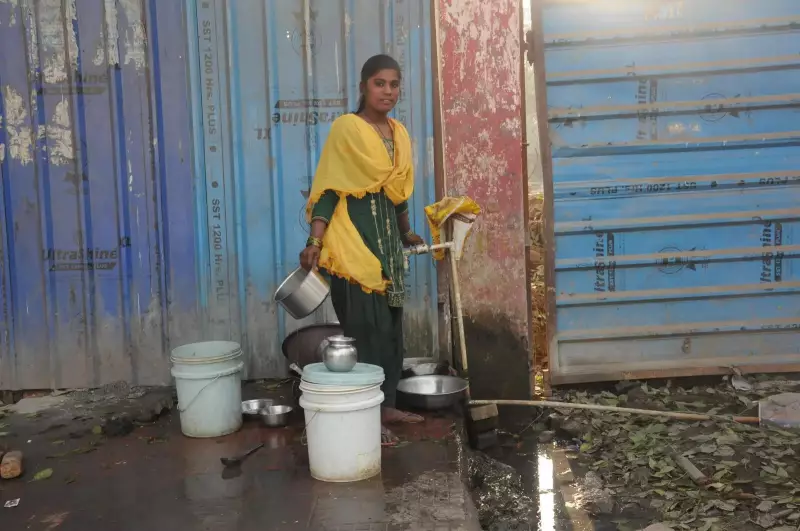
The recent tragedy in Indore, where at least ten people died after drinking sewage-mixed water, has sent shockwaves across India. For Bihar, a state perennially struggling with water quality, this incident is not just a distant news story but a stark and urgent warning. It highlights how fragile public health safeguards can be, even in cities lauded for cleanliness.
The Invisible Poison in Bihar's Groundwater
Bihar's dependence on groundwater is almost total. From drinking and cooking to daily chores, millions of homes rely on water drawn from beneath the earth. However, for a vast number of residents, every sip carries a hidden threat. The water is often laced with dangerous bacteriological contaminants or toxic elements like arsenic, fluoride, iron, lead, uranium, cadmium, and manganese.
The scale of this silent crisis is staggering. Official data reveals that as many as 30,207 rural wards across the state are exposed to water classified as "unsafe." The Bihar Economic Survey Report (2024-25) provides a chilling breakdown: arsenic contaminates groundwater in 4,709 wards, fluoride in 3,789 wards, and excessive iron is found in a massive 21,709 wards.

This means approximately 26% of rural wards across 31 of Bihar's 38 districts have groundwater sources where arsenic, fluoride, or iron exceed safe limits. The affected districts span the state, including Patna, Bhojpur, Bhagalpur, Gaya, Nalanda, Darbhanga, and many others, showing this is a widespread regional disaster.
Beyond Arsenic: A Deepening Toxic Threat
The problem extends beyond the commonly known contaminants. Recent studies have uncovered an even more alarming trend: the presence of heavy metals like uranium, cadmium, lead, and manganese in groundwater. The contamination is so pervasive that traces of these toxins have been detected not just in water, but also in food grains and even in mothers' breast milk, indicating a deep penetration into the entire food chain.
Expert Ashok Kumar Ghosh, former chairman of the Bihar State Pollution Control Board, traces the roots of this crisis back to the 1970s. The rapid expansion of tube well irrigation after the Green Revolution, often in water-scarce areas, led to severe aquifer depletion. This, he explains, triggered the contamination of groundwater with elements like arsenic and fluoride. His clear recommendation is that water in affected areas must be treated before any use.
Failing Infrastructure: The Surface Water Catastrophe
If groundwater tells one half of the story, the state of surface water completes a dire picture. Bihar generates an estimated 2,276 million litres per day (MLD) of sewage, but a huge portion flows untreated into rivers. The existing sewage treatment capacity falls far short of the daily waste generated.
"Bihar faces a severe challenge in managing its daily sewage with millions of litres untreated, polluting its rivers, particularly the Ganga," said Bhavuk Sharma, a Patna University geology teacher specializing in water quality.
The situation in the capital, Patna, is especially critical. The city generates about 450 MLD of sewage but can only treat between 50-121 MLD. The vast untreated remainder flows directly into the Ganga through major drains like Kurji, Rajapur, and Mandiri. While government projects aim to boost capacity, current infrastructure gaps mean most wastewater remains untreated.
"This leads to severe bacterial contamination in the river," stated R K Verma, general secretary of the Indian Science Congress Association. He also highlighted a critical urban planning flaw: drinking water pipelines laid alongside sewage lines risk contamination through leaks.
Echoing the need for urgent action, Bihar State Pollution Control Board chairman D K Shukla emphasized that sewage pipes must be laid much deeper than water supply lines to prevent cross-contamination from leaks. He stressed the urgent replacement of old, dilapidated pipes, warning that aging infrastructure significantly increases the risk of seepage and public health disasters.

The Indore tragedy is a grim reminder. For Bihar, where contamination is chronic and widespread, the warning bells could not be louder. The need for robust infrastructure, strict oversight, and sustainable water management is now a matter of life and death for millions.