Bhopal Confronts Critical Anti-Rabies Vaccine Shortage at JP Hospital
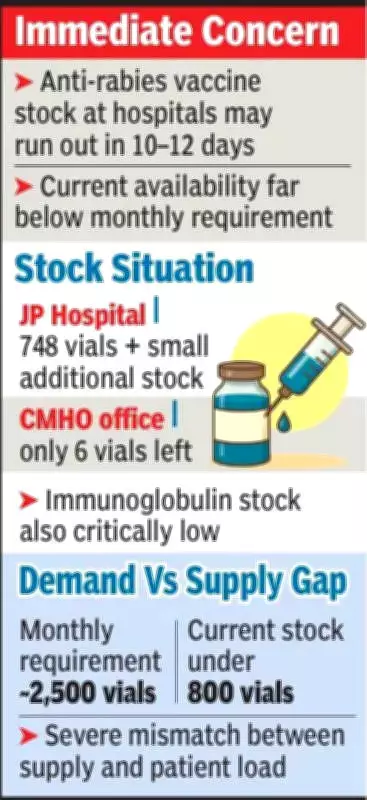
Bhopal is grappling with an escalating public health crisis as life-saving anti-rabies vaccine stocks at JP Hospital are projected to be exhausted within the next two weeks. This alarming situation has triggered widespread concern among medical professionals and health administrators, coinciding with a consistent surge in dog bite incidents across the city.
Precarious Vaccine Supplies and Overwhelming Demand
Current inventory at JP Hospital includes only 748 vials of anti-rabies vaccine and 49 doses of equine rabies immunoglobulin, supplemented by an additional 36 vaccine vials. However, the hospital's monthly consumption approximates 2,500 vials, rendering the existing stock adequate for merely 10 to 12 days at the current patient influx. The Chief Medical and Health Officer (CMHO) office maintains an even more limited reserve, with just six vaccine vials and 63 immunoglobulin doses available.
This supply deficit emerges against a backdrop where Bhopal reports approximately 20,000 dog bite cases annually, with JP Hospital alone managing 30 to 50 percent of these patients. Medical experts caution that any delay in restocking could compel patients to procure vaccines from private pharmacies, substantially increasing personal healthcare costs and postponing vital treatment. Timely vaccination is absolutely critical in rabies prevention, making any interruption potentially life-threatening.

Medical Community Expresses Grave Concerns
"We are attempting to manage with the available doses, but demand significantly surpasses supply," revealed a senior JP Hospital physician who requested anonymity. "If new consignments do not arrive promptly, we might be approaching a severe public health emergency."
Officials from both the CMHO office and district civil surgeon have remained unresponsive to inquiries regarding this critical shortage, amplifying uncertainties about immediate resolution strategies.
Inadequate Sterilization Efforts Amid Rising Cases
Despite the Bhopal Municipal Corporation's expansion of its Rabies-Free City initiative and doubling of sterilization centers over three years, outcomes remain insufficient. Official records indicate that until February 28, 2026, municipal authorities conducted 23,363 dog sterilization procedures and administered 29,766 anti-rabies vaccinations, expending roughly Rs 25.7 lakh.
Nevertheless, veterinary specialists estimate that Bhopal requires approximately 60,000 annual sterilization surgeries to meaningfully reduce the stray dog population. This year has already witnessed around 4,000 reported dog bite incidents, emphasizing the persistent public safety hazard.
Systemic Vulnerabilities and Urgent Calls for Action
Public health analysts emphasize that this crisis exposes fundamental weaknesses in vaccine distribution networks and underscores the pressing necessity for enhanced coordination between healthcare authorities and municipal agencies. The situation demands immediate intervention to strengthen supply chain resilience and implement comprehensive animal population management strategies.
Without swift governmental action and resource allocation, Bhopal risks descending into a deeper health emergency, jeopardizing community safety and overwhelming medical infrastructure. Proactive measures are essential to safeguard vulnerable populations and prevent avoidable tragedies.