

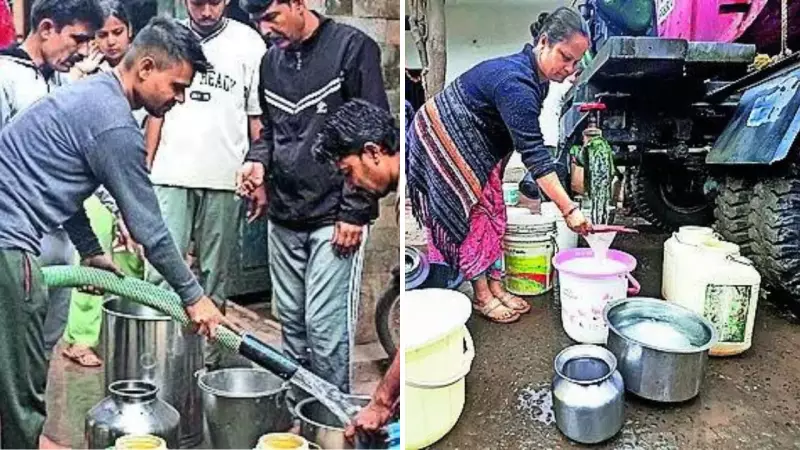
Years of official audit warnings about dangerously contaminated drinking water in Madhya Pradesh were ignored, long before a recent tragedy in Indore claimed at least ten lives and sparked public fury. The Comptroller and Auditor General (CAG) had repeatedly flagged systemic failures, revealing a staggering 5.45 lakh cases of water-borne diseases in the civic areas of Bhopal and Indore between 2013 and 2018.
Audit Alerts and a Chilling Tally of Disease
The stark alerts were part of a CAG report on General and Social Sectors for the year ending March 31, 2018. The report did not mince words, explicitly stating that "the possibility of contaminated water being supplied by the municipal corporations during the period could not be ruled out." It pointed to critical lapses in how urban local bodies monitored and tested drinking water, directly linking these failures to the massive public health toll.
To verify the situation on the ground, CAG auditors conducted joint sampling with municipal officials in Bhopal and Indore during August and September of 2018. They collected 54 samples from various points in the supply chain, including water sources, treatment plants, storage tanks, and consumer taps. Independent analysis at the State Research Laboratory in Bhopal yielded alarming results.

Faecal Contamination Far Exceeds Limits
In areas under the Bhopal Municipal Corporation (BMC), several samples contained faecal coliform—a bacteria that should be completely absent in safe drinking water. Turbidity in some samples also breached Bureau of Indian Standards (BIS) norms. The situation in Indore was even more dire, with faecal coliform counts ranging from 40 to 140, far above any permissible limit.
The audit concluded that approximately 8.95 lakh residents were likely affected by this contaminated supply—3.62 lakh in Bhopal and 5.33 lakh in Indore. The CAG attributed this crisis to a "lack of monitoring of filter plants at the operational level as well as at the distribution level."
Warnings Repeated, But Action Remained Elusive
The auditor's concerns did not stop with the 2018 report. In a subsequent audit on local bodies for the year ending March 31, 2022, the CAG found that seven out of fourteen randomly audited urban local bodies lacked water testing laboratories. The report noted that tests were not conducted regularly and civic bodies failed to follow the minimum sampling frequency prescribed by the Central Public Health and Environmental Engineering Organisation (CPHEEO).
This failure, the CAG warned, meant that "adverse effects on the health of the population due to supply of water without regular testing cannot be ruled out." Despite these clear and repeated red flags, sustained corrective measures were never implemented.
Public Outrage and Demands for Accountability
Following the recent deaths in Indore, the NGO Jan Swastha Abhiyan has written to the Madhya Pradesh Chief Secretary and the Union Jal Shakti Ministry. Citing the years of ignored audit findings, the NGO has demanded urgent action. Their communication underscores a tragic failure of governance: warnings sounded over half a decade ago were never translated into concrete, lasting measures to safeguard public health.
The sequence of events paints a grim picture of neglect. Official audits provided a clear, evidence-based roadmap of the dangers lurking in the water supply of two major cities. The documented consequences were already severe, affecting hundreds of thousands of citizens. Yet, the systemic inaction allowed the crisis to fester, ultimately culminating in preventable loss of life and widespread public outrage.






