

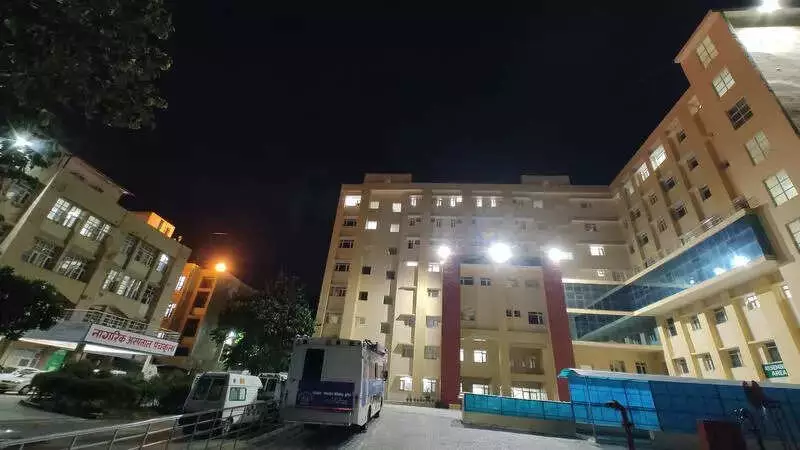
A massive 24-hour strike by contract workers at the prestigious Post Graduate Institute of Medical Education and Research (PGI) in Chandigarh on Tuesday brought essential hospital services to a grinding halt. The protest, involving over 2,000 employees, was staged to demand the payment of long-pending wage arrears and dearness allowance, leading to severe disruptions from operation theatres to patient wards.
Widespread Disruption in Critical Hospital Services
The strike commenced sharply at 6 am on Tuesday and was scheduled to last until 6 am on Wednesday. Workers assembled at the park near Gol Market, voicing their grievances against the non-payment of their dues. The impact was felt almost instantly across the sprawling hospital campus.
In the Nehru Hospital Extension, the routine of operating theatres was thrown into chaos. Procedures that typically begin by 7:30 am were delayed by nearly two hours, only starting around 9:15 am. With hospital attendants and sanitary staff absent, surgeons and resident doctors were forced to take on logistical tasks, which pushed back the entire day's surgical schedule significantly.

Patient Care and Catering Services Severely Affected
Patient care in various wards suffered a major blow. Reports confirmed that waste collection was not carried out on time, and the regular cleaning of bed areas was severely compromised. The absence of ward attendants placed an immense burden on the regular nursing staff and even relatives of patients, who had to step in to assist with basic patient movement and care.
The catering department faced one of the toughest challenges. With nearly 300 contract workers on strike, the administration had to manage with only 70 regular employees working double shifts. This led to a drastic reduction in service quality. Patients in private wards, who usually receive meals in tiffins, were served in disposable containers. The menu was heavily curtailed, with many wards reporting that patients were served mostly rice and khichdi. A notable shortage of rotis sparked several complaints from patients and their families.
Allegations of Intimidation and Future Warnings
The protest was led by the Joint Action Committee (JAC). Its members alleged that many workers were prevented from joining the strike due to intimidation tactics. They claimed that some contractors issued termination letters to workers in an attempt to break the protest. Despite these pressures, hundreds of employees reportedly left their duties midway to join the demonstration at the protest site.
One of the few areas that remained relatively stable was the Outpatient Department (OPD), where a smaller percentage of staff participated in the strike, allowing registrations and consultations to continue without major deadlock.
Ashwani Kumar Munjal, chairman of the JAC, announced that all workers would return to their posts by Wednesday morning. However, he issued a stern warning to the PGI administration, stating that he would commence an indefinite hunger strike if any worker faced penalties or was prevented from resuming their duties following the protest.






