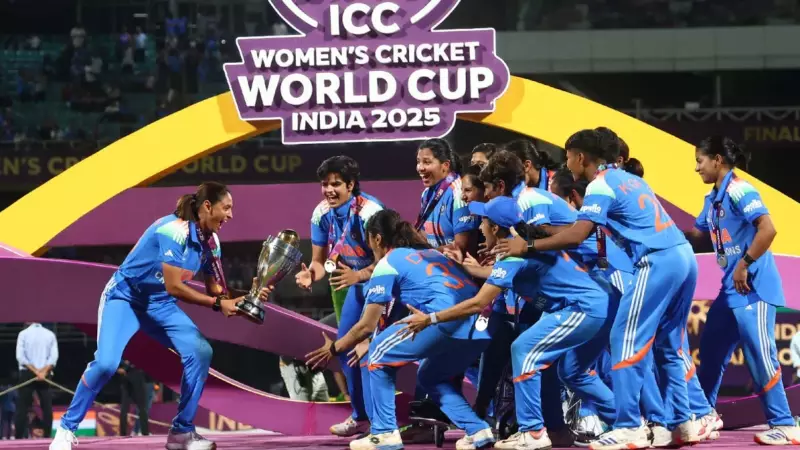
India's triumphant victory in the ICC Women's World Cup will forever mark a historic pinnacle for the sport in the country. However, behind the glitter of the trophy lies a less celebrated story of the players' journeys, one where their path to elite fitness was often paved with nutritional compromises and late dietary awakenings.
From Cola Bottles to Protein Scoops: Personal Battles with Diet
The developmental years of India's current stars were far from the ideal sports nutrition protocols. Harleen Deol, a member of the winning squad, once carried a sealed bottle of cola during a BCCI inter-zonal tournament as a personal test of restraint. Her brother, Dr. Manjot Singh, revealed she had to consciously cut out fast food to elevate her game.
For final's star Shafali Verma, an early debut brought an early realization. She quickly understood that protein deficiencies hampered her recovery from soreness. "Because I am a vegetarian, and it's very difficult for me to meet protein intakes, I relied a lot on protein powders," Verma recalls. She later incorporated green vegetables but admits the science behind vitamins and nutrient absorption isn't entirely clear to her.

This pattern of self-directed nutritional correction is common. Young all-rounder Sree Charani shunned chocolates and sugar in milk years ago. Her mother Renuka notes a reduction in oily foods. While her family eats meat on Wednesdays and Sundays, Charani learned to make omelettes to maintain protein levels. Similarly, for pacer Kranti Gaud, her coach Rajiv Bilthere introduced sprouts, chilla, fruits, and soaked black lentils to supplement her home diet of rice, dal, and chapati.
The Systemic Void: Poor Awareness and Economic Barriers
While dietary changes did occur, experts argue they often came too late. The country is now realizing that to sustainably chase the records of nations like Australia (7 trophies) and England (4), improved nutritional awareness from a young age is non-negotiable.
Mihira Khopkar, Lead Sports Nutritionist at Reliance Foundation Sports, surveyed about 100 female cricketers in Mumbai's gymkhanas back in 2016. "Their nutrition knowledge was poor, and they often opted for local snacks such as vada pav or biscuits post-training," Khopkar states. Intake of dairy, greens, fruits, eggs, and nuts was low. While awareness among elite cricketers has improved since, a significant gap remains compared to the systematic development in countries like Australia.
The challenge is multifaceted. Aditi Mutatkar, former international badminton player and head of the Women in Sport initiative at Simply Sport Foundation, points to economic constraints. "Sports science support hasn't yet reached the grassroots... The usual roti, chawal, daal, sabji diet often lacks the nutrient density needed for competitive sport," she explains. The financial burden of feeding an athlete is high, and many families lack the buying power for quality protein or essential supplements like magnesium.
Beyond Calories: Micronutrients, Menstrual Health, and Cognitive Function
The issue runs deeper than just macronutrients. Injuries linked to poor bone health are common, stemming from deficits in micronutrients like magnesium, Vitamin D, B12, and Vitamin K, which are scarce in typical Indian meals. Mutatkar emphasizes that discussions on menstrual health and its connection to nutrition and hormonal balance are rare at the grassroots level. This lack of awareness often manifests as anaemia, an early sign of Relative Energy Deficiency in Sport (REDs).
Repetitive stress fractures are frequently blamed on overtraining without investigating underlying nutritional or hormonal causes. "Unless we connect these injuries to menstrual health, hormonal balance, and early nutrition, long careers in sport will never be sustainable," Mutatkar warns.
The impact even extends to on-field performance. Khopkar notes that a diet low in quality carbohydrates can lower blood glucose, impairing the brain's decision-making efficiency during high-pressure situations, potentially turning winnable games into losses.

There is, however, a glimmer of progress. Cricketer Arundhati Reddy acknowledges that the Women's Premier League (WPL) has helped. "I was not extremely aware of how I should go about diet. But now, it's mandatory," she says, noting reduced injury rates and improved on-field movement and power-hitting.
As the celebrations from the January 2026 World Cup win subside, the hope is that this landmark achievement will mainstream the conversation around women's sports nutrition in India, making it as ubiquitous a topic as the diet fads of male icons like Virat Kohli. The journey for the next generation, while inspired, still requires a foundational shift in how young female athletes are fuelled from the very start.