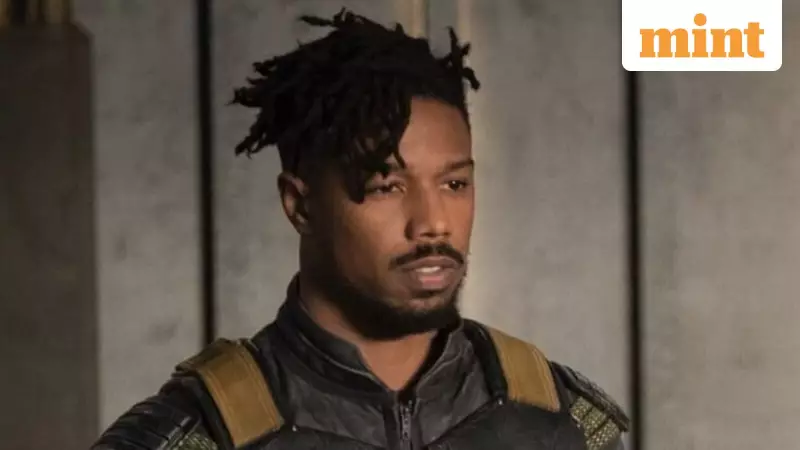
Hollywood star Michael B. Jordan has shared a deeply personal revelation about the psychological impact of his iconic role in the Marvel blockbuster, Black Panther. The actor disclosed that his intense portrayal of the villain Erik Killmonger became a pivotal moment in his life, ultimately pushing him to seek professional therapy for the first time.
The Emotional Weight of Becoming Killmonger
In a candid interview on CBS Sunday Morning, Jordan reflected on the 2018 film directed by Ryan Coogler. He earned widespread acclaim and a Golden Globe nomination for his performance as the complex Wakandan antagonist. However, the emotional toll of the character stayed with him long after the cameras stopped rolling.
Jordan explained that to authentically capture Killmonger's psyche—a man shaped by betrayal, loss, and systemic failure—he immersed himself in a state of isolation during preparation. "For a while, in preparation for that role, I didn't really speak to my family that much. I was kind of isolated a bit," he admitted. This process of living like the character, he found, came with an unexpected and heavy emotional cost.
The Unanticipated Aftermath and Path to Healing
In Black Panther, Killmonger's rage is fueled by the trauma of his father N'Jobu's death at the hands of King T'Chaka, father of T'Challa (played by the late Chadwick Boseman). Jordan's portrayal was praised for adding profound depth to the Marvel Cinematic Universe's roster of villains. Yet, shedding the character's anger and frustration proved difficult.
"After the movie, it kind of stuck with me for a bit," Jordan revealed. This lingering effect led him to a crucial decision: "I went to therapy, talked about it, found a way to kind of just decompress." He described this as a learning moment in his career, realizing the necessity of actively separating from such demanding roles. He emphasized that acting is often a solitary journey, with no standard blueprint for managing its psychological demands.
Therapy as a Gateway to Self-Discovery
What began as a necessity to process a single role evolved into a much broader and meaningful journey. Jordan stated that his therapy sessions "spiraled into a bigger conversation and self-discovery," fundamentally changing his perspective on mental wellness. He passionately addressed the stigma often associated with therapy, especially for men.
"So, that's something I'm not ashamed of at all and very proud of," Jordan asserted. "It definitely helped me throughout the years and to this day of trying to be a good communicator and a well-rounded person, inside and out." His experience underscores the hidden emotional demands of transformative acting.
Jordan's openness adds his voice to a growing chorus in Hollywood advocating for mental health awareness. His story highlights how deeply immersive roles can leave a lasting imprint and why seeking professional help is not a sign of weakness, but an essential step in the artistic and personal process.