Pune Urologists Create Medical History with Groundbreaking Surgery
In a remarkable medical achievement, a team of city-based urologists in Pune has successfully performed a world-first surgical procedure, combining advanced robotic technology with innovative tissue grafting to solve a complex urological problem. The team executed a laparoscopic pyelolithotomy – a minimally invasive procedure to remove kidney stones – on a patient with a rare anatomical condition, simultaneously using a graft from the inside of the patient's cheek to repair the damaged organ.
This pioneering combination of techniques has now been officially documented in the Journal of Robotic Surgery on October 30, recognized internationally as the first case of its kind ever recorded.
The Patient's Challenging Condition
Dr. Suresh Patankar, a leading urologist and chairperson at Ace Hospital, recounted the patient's initial visit. "The patient came to us with complaints of prolonged abdominal pain, and conservative treatments had provided no relief," Dr. Patankar stated.

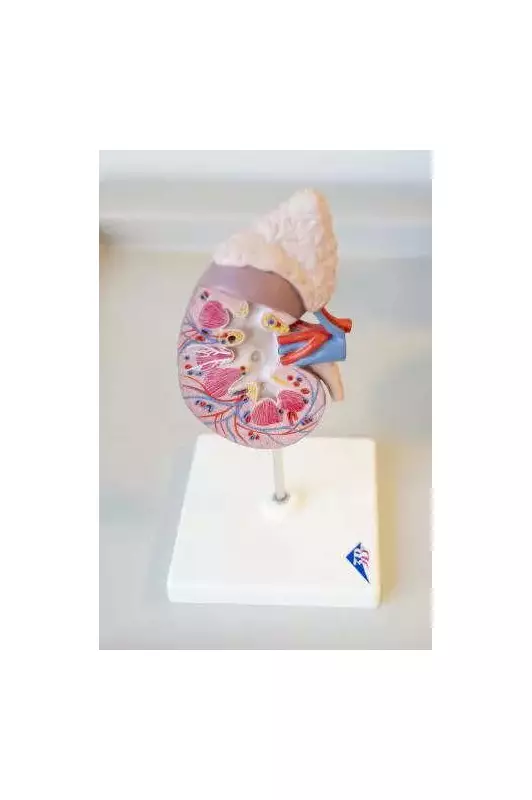
Upon a thorough examination, the medical team uncovered the root of the problem. The patient was diagnosed with an ectopic pelvic kidney, a very rare birth defect where the kidney is situated lower in the pelvis than its standard position. Compounding this rare condition, the patient also had multiple kidney stones that were severely blocking the junction between the kidney and the ureter, leading to excruciating pain.
The surgery presented immense challenges due to the kidney's unusual location and structure. Senior urologist Dr. Gururaj Padasalagi, who assisted in the operation, explained the complexities. "The patient had a short ureter, complex blood vessels, multiple stones, and the kidney was in close vicinity to the intestines," he said. Dr. Padasalagi further elaborated that long-standing stones cause inflammation and scarring, making tissues fragile. "Any attempt at suturing for repair risks tearing the tissues, which increases the danger of bleeding, infection, and other complications," he added.
A Revolutionary Single-Stage Procedure
Traditionally, such intricate operations were performed in two separate stages. However, the advent of robotic technology has revolutionized complex surgeries, making them safer, more efficient, and less stressful for both patients and surgeons.
Urologist Dr. Sachin Bhujbal detailed how the robotic surgical system was instrumental. "The robotic system allowed us to precisely remove the stones and repair the kidney in a single procedure," Dr. Bhujbal said. He emphasized that the damage to the ureter was significant. "In the absence of existing guidelines for such a complex case, we devised a plan to remove the stone laparoscopically and endoscopically, while simultaneously using a buccal mucosa graft – the skin from inside the cheek – to repair the blockage."
The use of buccal mucosa is a established technique in reconstructive urology, prized for its robustness and compatibility.
Successful Recovery and Global Recognition
The innovative approach yielded excellent results. According to fellow Dr. Saurabh Uplenchwar, the patient experienced a smooth recovery. "The patient was discharged just four days after the surgery," Dr. Uplenchwar reported. "Follow-up examinations have shown good results with no further blockages, confirming the success of the procedure."
This landmark case not only provided relief to the patient but also contributed a new protocol to the global medical community. The successful single-stage surgery, documented as an assisted laparoscopic pyelolithotomy with concomitant buccal mucosal graft pyeloplasty in an ectopic pelvic kidney, sets a new precedent for treating similar complex urological conditions worldwide.