

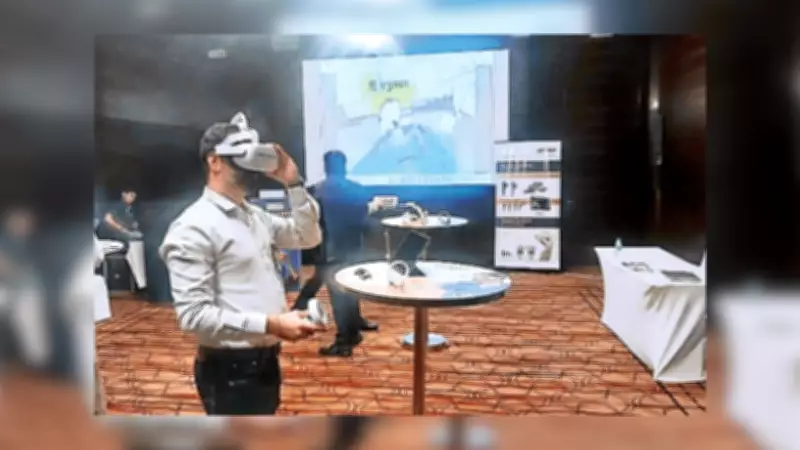
Pune Hosts Groundbreaking Conference on VR and AI in Shoulder Surgery
Pune has become the epicenter of a technological revolution in orthopedic surgery, as over 300 shoulder surgeons from around the world converged for a two-day conference focused on virtual reality (VR) and artificial intelligence (AI) applications. This gathering, which included more than 50 international experts, showcased how these advanced technologies are transforming surgical training and preoperative planning for complex shoulder procedures.
The Rise of VR Surgical Simulation Platforms
Shoulder surgeries present unique challenges due to the joint's exceptional mobility, making precise training crucial for surgical success. The conference highlighted a cutting-edge VR-based surgical simulation platform that allows doctors to enter shared virtual operating rooms. Here, they can practice intricate procedures on detailed 3D patient models and learn directly from global specialists without risking actual patients.
Dr. Ashish Babhulkar explained that the VR Meta Quest headset, originally developed for gaming, has been ingeniously adapted for surgical training by developers in Canada. "Multiple surgeons can log in simultaneously, practice procedures repeatedly, and refine their techniques in a risk-free environment," he emphasized. This innovative approach not only enhances patient safety but also significantly reduces actual surgical time by allowing surgeons to perfect their skills virtually first.

Real-Time Mentoring and Expanded Applications
The VR platform enables unprecedented real-time mentoring opportunities. Using separate headsets, experienced surgeons can join remotely to demonstrate proper instrument handling, correct techniques, and guide procedures interactively. "Surgeons can now perform complete virtual surgeries from their homes, eliminating the need for physical operation theaters or patients during training," Dr. Babhulkar noted.
While the current focus is on shoulder surgeries, the same virtual system can be adapted for knee, hip, and other orthopedic procedures. Incorporating additional surgical scenarios requires optimization and coordination with developers—a process that typically takes just a few days to implement.
AI-Powered Preoperative Planning Systems
Complementing the VR training, surgeons are already utilizing AI-powered preoperative planning systems that analyze patient CT scans uploaded by doctors. These sophisticated systems:
- Identify bone deformities with precision
- Calculate optimal implant sizes and alignment
- Generate multiple surgical design simulations
"This technology allows surgeons to evaluate the pros and cons of each design before selecting the best approach for their patient, completely eliminating guesswork in the operating theater," Dr. Babhulkar explained.
Evolution of a Pioneering Academic Platform
Dr. Vedant Shah from Rajkot, Gujarat, traced the conference's origins to 2003 when Dr. Babhulkar first conceptualized it as a basic instructional workshop. "Over two decades, it has evolved into a comprehensive academic platform attracting faculty from all six continents," Dr. Shah remarked. What began with foundational teaching now encompasses both basic procedures and highly complex surgical cases.
The conference facilitates direct interaction with legendary surgeons and encourages discussions about complicated cases. These exchanges provide participants with broader perspectives on their surgical methods and decision-making processes, fostering continuous improvement in orthopedic care.
Bridging the Experience Gap
Dr. John Joseph from Kottayam, Kerala, highlighted how VR technology bridges the critical gap between merely observing surgeries and actually performing them. For many participants, including Dr. Sanjay Shyam Deo—a professor of orthopedics at Symbiosis University Hospital in Pune with three decades of experience—this conference provided their first hands-on exposure to these advanced systems.

"Such immersive systems are particularly valuable for understanding the technical nuances of complex procedures that are difficult to grasp through traditional observation alone," Dr. Deo observed, underscoring the transformative potential of these technologies for both novice and experienced surgeons alike.





