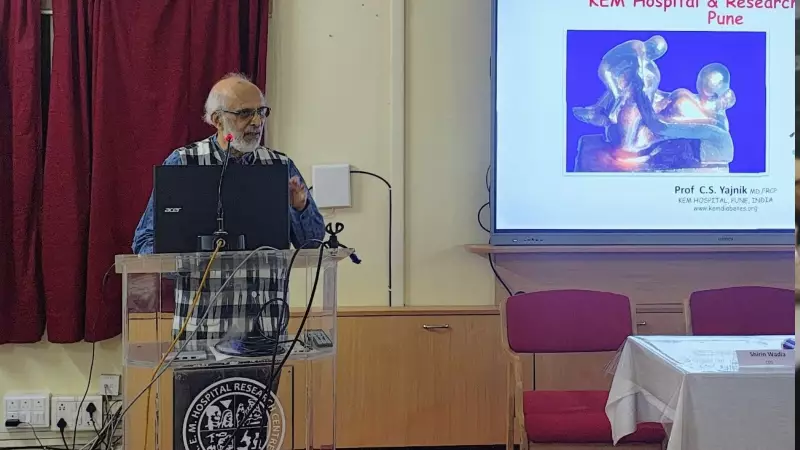
In a significant medical breakthrough that could reshape diabetes management globally, eminent researcher Dr Chittaranjan Yajnik from Pune's KEM Hospital has brought attention to a newly recognized form of diabetes - Type-5 - predominantly affecting undernourished individuals with low Body Mass Index.
Global Consensus on New Diabetes Classification
The identification of Type-5 diabetes follows an international consensus meeting held in Vellore, India, in January 2025, where diabetes experts proposed the new classification to distinguish it from more common types. The Lancet Global Health recently published a paper co-authored by Dr Yajnik highlighting this unusual form of diabetes seen among undernourished populations.
Dr Yajnik, who heads the Diabetes Unit at KEM Hospital, Pune, emphasized the urgent need for systematic documentation and deeper investigation into its complex causes. "If Type-2 diabetes demands that people eat less and walk more, then Type-5 diabetes poses novel challenges," he stated during a media interaction ahead of World Diabetes Day on November 14.

Distinct Characteristics of Type-5 Diabetes
Type-5 diabetes patients present a unique clinical profile that differentiates them from other diabetes forms. These individuals typically come from socio-economically deprived populations in low and middle-income countries and rural communities. They exhibit low BMI, insulin deficiency, and high glucose levels but do not develop ketoacidosis unlike Type-1 diabetes patients.
On specific testing, they show insulin sensitivity and lack the major genetic mutations associated with other diabetes forms. Their pancreas doesn't show stones or significant damage, indicating a different pathological mechanism altogether.
International Recognition and Research Implications
The International Diabetes Federation officially recognized Type-5 diabetes as a subtype during their recent meeting in Bangkok in April 2025. The global body has promoted establishing a working group to further investigate this variety of diabetes.
Dr Yajnik believes this recognition will help improve acceptance of the condition and attract much-needed funding for research. "India is expected to make a substantial contribution to this activity," he added, noting the timing coincides with this year's World Diabetes Day theme 'Diabetes Across Life Stages'.
The researcher highlighted the growing concern that with undernutrition re-emerging globally due to climate change, migration, famine, and conflicts, Type-5 diabetes may assume far-reaching implications. Proper documentation and research could pave the way for preventive strategies and tailored treatments addressing both ends of the nutrition spectrum.
KEM Hospital's Diabetes Initiatives
The announcement was made in the presence of KEM Hospital CEO Shririn Wadia and Chief Operating Officer Dr Rakesh Shah. The hospital also showcased its innovative patient-support initiatives, including ClubOne KEM, which has more than 1,700 Type-1 diabetes patients.
Dr Smita Dhadge, diabetologist and sleep medicine expert at the unit, explained that Type-1 diabetes occurs most commonly in children and adolescents who need multiple daily insulin injections to survive. The hospital has developed the Madhuraksha mobile application, available free on Android and iOS, serving as a "pocket diabuddy" for patients and families.
The app, with over 2,000 downloads and nearly 800 active users, provides vital information on insulin administration, glucose monitoring, travel tips, and sick day care. ClubOne has also designed a special compact Diabag that children with Type-1 diabetes can carry to school or during travel, providing safe storage for all essential supplies.