

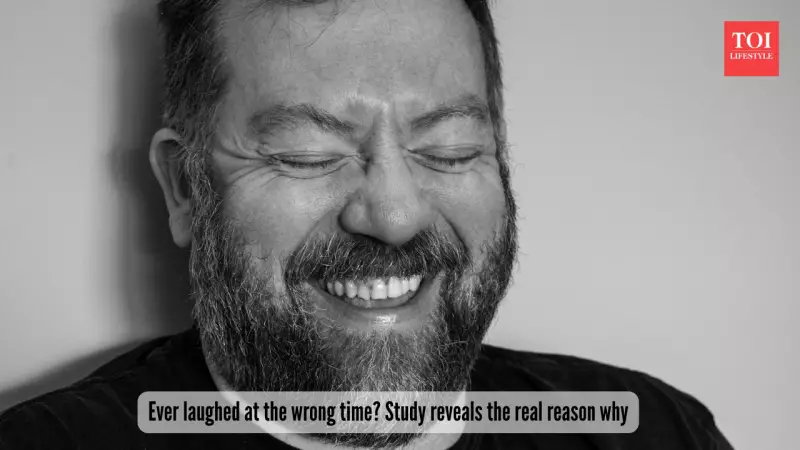
Have you ever found yourself in a quiet, serious meeting or a solemn ceremony, only to feel an uncontrollable urge to giggle? You try to clamp it down, but your face betrays you, and a snort or smirk escapes. This awkward experience is almost universal. Now, a scientific study has uncovered the precise reasons why holding back laughter feels like an impossible task, especially when we are around other people.
The Science Behind Uncontrollable Laughter
A significant study published in the journal Nature in November 2025 provides fascinating insights into this common social dilemma. The research focused on what happens when people try to suppress their emotional reactions, specifically laughter. Scientists measured participants' facial muscle activity while they listened to jokes and attempted to stifle their laughs.
The key finding was that while suppression could hide the visible, full-blown laughter from the face, the feeling of amusement continued to rage intensely inside. Participants who successfully kept a straight face still rated the jokes as just as funny as those who laughed openly. This internal pressure is why small leaks—like snorts, smirks, or micro-smiles—often sneak out in the most inappropriate situations. The emotion doesn't fade; it just finds another way to express itself.

Why Group Settings Make It Worse
The research highlighted a powerful social trigger: the infectious nature of group laughter. Hearing others crack up makes a joke seem funnier and makes personal suppression efforts almost useless. The study found that in a social setting, the combined force of others' laughter overrides an individual's control mechanisms.
This phenomenon serves a social purpose. Mimicking and syncing emotions through laughter, even in suppressed forms like shared twitches or micro-expressions, helps build group bonds and cohesion. So, when your colleague starts giggling during a serious presentation, your brain is hardwired to join in, making a "poker face" nearly impossible to maintain.
When Trying Not to Laugh Backfires
Ironically, the act of trying hard to stay straight-faced can have a boomerang effect, intensifying the inner tickle. The Nature study's data showed that participants' small facial twitches during suppression were actually linked to peaks of inner amusement. The brain ends up in a tug-of-war, juggling the effort to control the reaction with the ongoing humorous stimulus. This conflict creates more tension, not relief.
This explains why social dares or situations where you're explicitly told "don't you dare laugh" often lead to the most severe laughter leaks. The social cues and the heightened focus on control create a perfect storm for failure.
So, How Can You Actually Control It?
The study suggests two primary strategies that can help curb unwanted laughter. The first is cognitive reappraisal, which involves analytically picking apart the joke or situation to reduce its perceived funniness. The second is distraction—actively redirecting your attention to something else entirely.
For the best results, you can combine these tactics. Try to analytically deconstruct why something is funny, and then immediately shift your focus. Look away, avoid eye contact with other potential laughers, or think about a completely neutral or serious topic. Breaking the "contagious contact" of shared glances or group energy is crucial to avoiding the laughter trap in serious settings.






