The Supreme Court of India, in a rare and emotional moment during proceedings related to passive euthanasia, commended the family of Harish Rana for their decision to donate his corneas and heart valve after permission was granted to withdraw life support. The court observed that his 'life continues in others' through this act of tissue donation.
Background of the Case
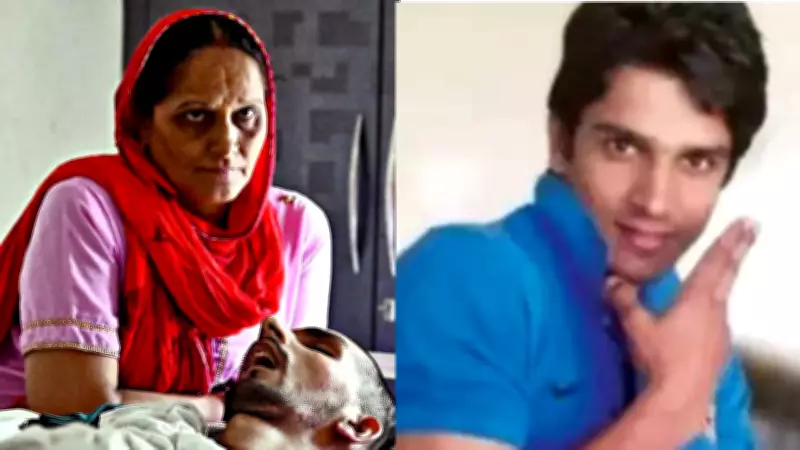
Harish Rana had been in a permanent vegetative state since 2013 after falling from a building. On March 11, the Supreme Court allowed his family's plea to withdraw life support, concluding that there was no possibility of recovery. Rana passed away on March 24 after being shifted from his residence to palliative care at AIIMS New Delhi, in accordance with the court's order.
Family's Generous Decision
Even in their grief, the family chose tissue donation so that Rana's corneas and heart valve could help patients in need. The bench of Justices J B Pardiwala and K V Viswanathan remarked, 'This litigation has taught many things to one and all, including two of us as judges. His family chose generosity through the selfless decision to donate his corneas and heart valve. Through this act, his life continues in others. His legacy will live on in the lives of those he saved.'

Medical and Emotional Aspects
Dr. Seema Misra, Professor and Head of Onco-Anaesthesia and Palliative Medicine at AIIMS, stated that the family had undergone years of emotional suffering and legal struggle before reaching the final stage. 'Even if families prepare themselves legally and medically, the actual moment of loss is emotionally overwhelming,' she said. According to Dr. Misra, doctors held detailed discussions with the family after the Supreme Court order to explore whether any form of donation was medically feasible. Since conventional organ donation was not possible, AIIMS teams assessed the possibility of tissue donation, including corneas and heart valves.
Process of Tissue Retrieval
Specialised retrieval teams were involved, and the process was carried out swiftly after Rana's death. Dr. Misra explained, 'Those moments are extremely stressful because on one hand the family is losing someone close to them, but at the same time they took a very noble decision after multiple counselling sessions. I think they found some satisfaction in knowing that they were doing something meaningful for society.' Doctors noted that cornea donation generally does not cause visible disfigurement, while heart valve retrieval is also conducted respectfully with proper reconstruction procedures. AIIMS officials said that details regarding recipients are usually not disclosed due to confidentiality norms governing tissue allocation and transplantation.
Legal Perspective
A lawyer associated with the case mentioned that the Supreme Court's observations appreciating the family's decision were dictated in court. The case highlights the delicate balance between legal procedures, medical ethics, and human compassion.