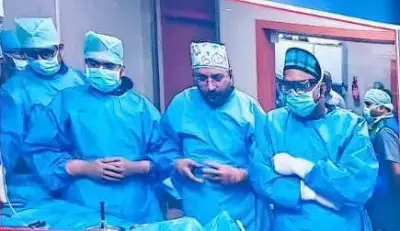
In a significant advancement for otolaryngology, Russia has initiated the clinical application of a novel cell-based technology designed to repair damaged eardrums. This pioneering medical procedure, which leverages the body's own cells to regenerate tissue, marks a new frontier in treating traumatic perforations of the tympanic membrane.
A New Era in Hearing Restoration
The groundbreaking technology, developed by Russian scientists, has now moved from the laboratory to real-world clinical use. The core of the innovation lies in a biodegradable matrix or scaffold that is implanted at the site of the eardrum injury. This scaffold is not just a passive patch; it is populated with the patient's own cells, specifically fibroblasts, which are crucial for connective tissue formation.
This method represents a substantial leap over traditional treatments like tympanoplasty, which often involves grafting tissue from elsewhere in the patient's body. The cell-based approach aims for a more natural and complete regeneration of the eardrum's intricate structure, potentially leading to better hearing outcomes and faster recovery times.

The Science Behind the Procedure
The clinical process begins with a minor biopsy, where a small sample of cartilage is taken from the patient's ear. From this sample, fibroblast cells are extracted and cultivated in a specialized laboratory setting. Once a sufficient cell population is grown, they are transferred onto the biodegradable matrix.
This cell-laden scaffold is then surgically placed onto the perforated eardrum. Acting as a bioactive framework, it guides the growth and multiplication of the patient's cells, facilitating the natural healing process. Over time, the scaffold safely dissolves as the new, healthy eardrum tissue takes its place.
Implications and Future Prospects
The commencement of clinical use for this technology is a major milestone. It offers new hope for patients suffering from chronic eardrum perforations due to injury or infection, conditions that can lead to persistent hearing loss, recurrent infections, and a diminished quality of life.
While the initial clinical implementation is a critical step, wider adoption and long-term success will depend on the outcomes observed in these early patients. Medical professionals will be closely monitoring the efficacy, safety, and durability of the repairs. A successful track record could establish this as a standard, minimally invasive procedure for eardrum regeneration not only in Russia but potentially worldwide.
This development underscores Russia's active role in pioneering biomedical research. It highlights a global trend towards regenerative medicine, where treatments focus on repairing or replacing damaged tissues and organs using advanced cell-based therapies. For the millions affected by hearing impairments globally, such innovations signal a promising future where hearing loss can be effectively reversed through biological repair.