

Pune Veterinary Clinic Performs Life-Saving Procedure on Labrador
A private veterinary clinic in Pune achieved a remarkable medical feat last month. The clinic successfully performed a minimally invasive cathlab-guided embolisation procedure on a thirteen-year-old male Labrador. This innovative approach saved the dog's life when conventional surgery presented an unacceptably high risk of fatal bleeding.
Critical Condition of the Pet
The Labrador belonged to a Pune-based couple. Their pet suffered from multiple severe health issues. The dog experienced severe anaemia and critically low platelet levels. It also faced respiratory distress and had large cancerous tumours in both the liver and spleen.
According to the Small Animal Clinic where treatment occurred, the Labrador remained in a highly critical condition for several months. The dog presented with abdominal distension, which means visible swelling of the abdomen. It showed severe weakness and had difficulty standing and walking. The animal also suffered from breathlessness.

"Clinical examination revealed a large abdominal mass weighing approximately 2.5 to 3 kilograms," the clinic stated clearly.
Diagnosis and Treatment Challenges
Subsequent investigations included ultrasound and CT scans. These confirmed the presence of large splenic and liver tumours. Doctors suspected these tumours were malignant, meaning cancerous, with possible metastasis.
Dr Narendra Pardeshi, a veterinary surgeon with the clinic, explained the situation. "After confirming a large splenic tumour with a liver tumour, we immediately focused on stabilising the Labrador and planning the safest possible life-saving approach," he said.
Dr Pardeshi noted that such conditions commonly appear in older dogs. This is especially true for dogs with a history of tick fever and splenic tumours. These tumours tend to be highly aggressive and rich in blood supply. That characteristic makes treatment extremely challenging.
Risks of Traditional Surgery
Traditionally, veterinarians manage such cases through open abdominal surgery. However, Dr Pardeshi highlighted the significant risks involved. The risk of uncontrollable bleeding and death was extremely high. This danger increased because both the liver and spleen were involved. The dog also had severely compromised blood parameters.
The medical team administered an emergency blood transfusion using blood donated by another dog. Even after forty-eight hours, the Labrador's blood parameters showed minimal improvement. This situation made conventional surgery unsafe.
"Operating under these conditions would have been extremely dangerous. This is when we decided to adopt an unconventional but minimally invasive interventional cathlab approach," Dr Pardeshi emphasized.
The Innovative Procedure
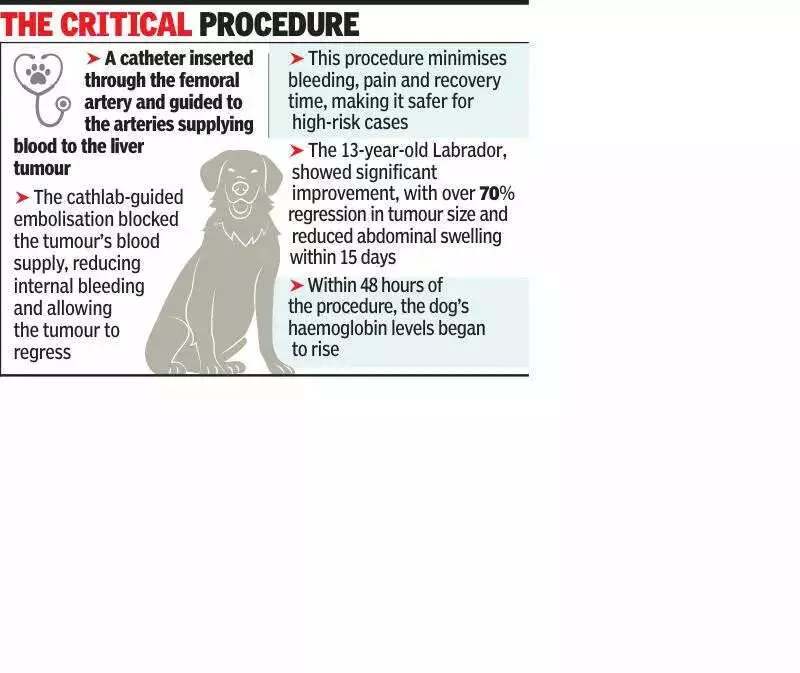
An interventional embolisation procedure took place on December 15 last year. The procedure occurred under expert guidance. Vascular surgeon Dr Dharmesh Gandhi and interventional radiologist Dr Kiran Naiknaware provided their expertise. Critical technical support came from Kanhaiya Khaire, the cath lab technician and manager of the cardiac department.
This cathlab-guided approach represented a significant departure from standard veterinary practice. It allowed doctors to target the tumours without major invasive surgery.
Remarkable Recovery
The results appeared quickly. Within forty-eight hours of the procedure, the dog's haemoglobin levels began to rise. Follow-up evaluations after fifteen days showed more than seventy percent regression of the tumour. The dog also experienced a significant reduction in abdominal swelling.
"Today, Muffin is active, alert, and steadily recovering," Dr Pardeshi reported happily. The Labrador named Muffin now enjoys a much-improved quality of life thanks to this pioneering veterinary intervention.
This case demonstrates how advanced medical techniques can cross over from human medicine to veterinary care. It offers new hope for treating critically ill pets with complex conditions. The successful outcome highlights the skill and innovation present in Pune's veterinary community.






