

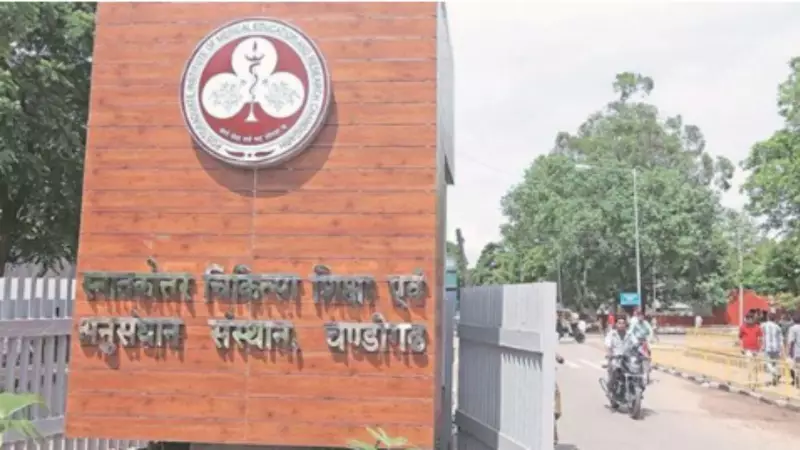
PGIMER Chandigarh Achieves Medical Milestone with Dual Organ Transplant
In an extraordinary display of medical expertise and inter-institutional collaboration, the Postgraduate Institute of Medical Education and Research (PGIMER) in Chandigarh has successfully saved two lives through simultaneous liver and pancreas transplants. This groundbreaking procedure marked the first time a liver was transported by road from AIIMS-Rishikesh to PGIMER, overcoming severe weather conditions and critical time constraints.
Overcoming Extreme Challenges for Life-Saving Mission
The medical teams faced unprecedented challenges during this complex operation. Battling biting cold temperatures, incessant rainfall, and strong winds, the transplant teams navigated prolonged road travel while racing against the clock to preserve organ viability. The precious organs were transported under extreme pressure to ensure they reached waiting recipients without compromise.
Professor L Kaman, Head of the Department of General Surgery at PGIMER, emphasized the significance of this achievement. "For the first time in our institution's history, we transported a liver by road from AIIMS-Rishikesh to PGIMER to minimize ischemia time. This required meticulous planning and execution under the most challenging circumstances," he stated.

The Donor's Legacy of Life
The life-saving journey began when 42-year-old Raghu Paswan was admitted to AIIMS-Rishikesh on January 16, 2026, after sustaining critical injuries from a two-story fall. Despite comprehensive medical interventions, he suffered severe traumatic brain injury and was declared brain-dead. In a moment of profound courage, his family chose to donate his organs, offering hope to multiple patients awaiting transplants across India.
Organ allocation followed the Transplantation of Human Organs and Tissues Act (THOA), 1994 provisions:
- The liver, one kidney, and pancreas were allocated to PGIMER, Chandigarh
- One kidney went to AIIMS, New Delhi
- The heart was allocated to Army Hospital, New Delhi
- The lungs were sent to Apollo Hospital, Chennai
Professor Vivek Lal, Director of PGIMER, reflected on this humanitarian act. "This organ donation stands as a powerful reminder that humanity shines brightest in moments of loss. The selfless decision of the donor family, combined with extraordinary teamwork across institutions, has given multiple patients a renewed lease on life," he remarked.
Medical Breakthrough in Pancreas Transplantation
The pancreas transplant represented a particularly significant medical achievement. Professor Ashish Sharma, Head of Renal Transplant at PGIMER, explained the complexities involved. "There are only a handful of pancreas transplant programs in India, despite numerous patients suffering from diabetes and kidney failure. The pancreas is an extremely time-sensitive organ where retrieval and transplantation must be completed within a strict 12-hour window," he noted.
The pancreas was successfully transplanted into a 28-year-old woman who had been struggling with diabetes since childhood. "She had been on multiple daily insulin injections since the age of eight. The successful transplant has shown complete signs of recovery, offering her a new quality of life," Professor Sharma added.
Coordinated Effort Across Multiple States
The logistical coordination required for this multi-state organ transfer was monumental. Dr (Maj) R P S Bhogal, Associate Professor in the Department of Hospital Administration at PGIMER, detailed the extensive efforts. "This mission tested our real-time coordination capabilities under extreme pressure. Synchronizing multiple transplant teams, ensuring uninterrupted inter-state movement, and navigating adverse weather demanded flawless administrative and on-ground support," he stated.
The operation required exceptional cooperation from various stakeholders:

- State administrations across multiple regions
- Traffic police departments
- National Organ and Tissue Transplant Organization (NOTTO)
- Regional Organ and Tissue Transplant Organization North (ROTTO North)
- Hospital authorities at multiple institutions
Dr Bhogal specifically acknowledged the crucial role played by Sanjiv Kumar, Security Officer at PGI, who coordinated with Superintendents of Police across multiple districts when one convoy vehicle experienced delays, ensuring seamless movement of the organ transport.
Setting New Standards in Medical Collaboration
This successful dual organ transplant establishes new benchmarks for medical collaboration in India. The PGIMER liver transplant team undertook an urgent organ retrieval and transplant mission involving overnight road travel and marathon surgical procedures, ultimately saving critically ill patients who had been waiting for life-saving interventions.
The achievement demonstrates how coordinated efforts between medical institutions, administrative bodies, and law enforcement can overcome even the most challenging circumstances to save lives. The establishment of timely green corridors and flawless execution of transport logistics proved essential to the mission's success.
This medical milestone not only saved two lives but also strengthened the framework for future inter-institutional organ transplants across India, proving that with proper coordination and dedication, geographical barriers can be overcome in the race against time to preserve human life.





