

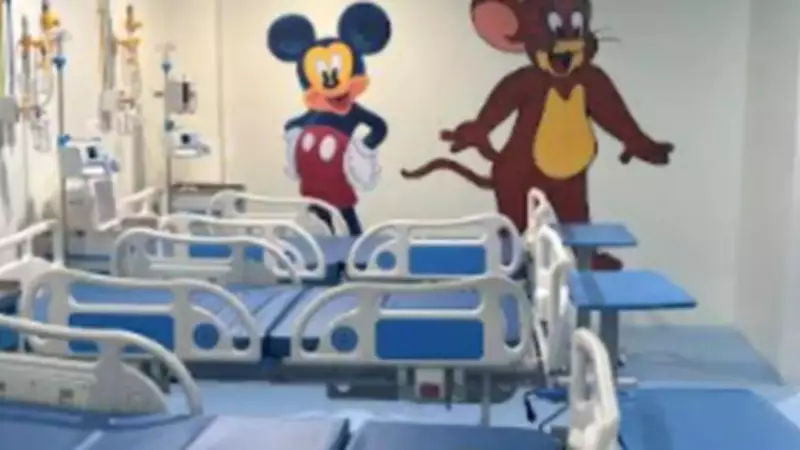
Kolkata's IILDS Inaugurates Specialized Pediatric Gastroenterology Department
As the Indian Institute of Liver and Digestive Sciences (IILDS) commemorates its 11th anniversary, the institute has taken a significant step forward by establishing a comprehensive pediatric gastroenterology department. This new unit, officially inaugurated on Friday, is scheduled to commence full operations starting March 2, addressing a critical healthcare gap in the region.
Addressing a Critical Healthcare Gap in Eastern India
Despite the escalating prevalence of gastrointestinal disorders among children, West Bengal has faced a severe shortage of superspecialty facilities dedicated to pediatric care. Currently, the government-run IPGMER & SSKM Hospital stands as the sole tertiary care institution in Bengal with a functioning pediatric gastroenterology department. Within the private healthcare sector, such specialized services remain limited to isolated clinics managed by a handful of experts.
This scarcity extends across the nation, with only a select few hospitals boasting dedicated pediatric gastroenterology units. The rising burden of gastrointestinal conditions, including fatty liver disease in children, has created an urgent need for organized, specialized care that traditional adult gastroenterology departments cannot adequately provide.

Expert Leadership and Comprehensive Services
To lead this pioneering initiative, IILDS has assembled a team of distinguished medical professionals. The department will be spearheaded by Professor Ujjal Poddar, former head of the pediatric gastroenterology department at SGPGIMS Lucknow, alongside pediatric hepatologist Dr. Sammannay Das from ILBS Delhi.
Professor Poddar emphasized the growing healthcare challenge, stating, "Gastrointestinal diseases, including irritable bowel syndrome, Crohn's disease, and fatty liver, have become increasingly common among children due to evolving lifestyles and dietary habits. However, this superspecialty remains notably lacking in eastern and northeastern India."
Dr. Abhijit Chowdhury, hepatologist and Chief Mentor to Liver Foundation West Bengal (LFWB), which operates the Sonarpur-based institute, explained the department's mission: "A gastroenterologist trained for adult patients lacks the specific expertise required to treat children effectively. These young patients need specially trained medical professionals. We will launch both outpatient (OPD) and in-patient facilities from March 2 to provide comprehensive care."
Institute Growth and Regional Impact
IILDS Executive Director Partha Sarathi Mukherjee, who also serves as secretary of LFWB, highlighted the institute's remarkable evolution since its inception in February 2016. What began as an outpatient service has transformed into a 100-bedded hospital that operates on a not-for-profit basis. Over the years, IILDS has expanded its services to include advanced treatments like liver transplants while incorporating state-of-the-art infrastructure, including high-end imaging and radiation equipment.
The institute's impact extends beyond West Bengal, serving patients from neighboring states and northeastern regions of India. In addition to clinical care, IILDS maintains an active research program with various international collaborations and now operates a nursing institute to support healthcare education.
Professor Poddar, a graduate of North Bengal Medical College who recently returned to his home state after a distinguished career, noted his motivation for joining IILDS: "Since IILDS operates as a non-profit philanthropic organization, I believed this was the ideal platform to contribute to patient care and research activities in Bengal." His expertise was instrumental in establishing the pediatric gastroenterology department at SGPGIMS Lucknow, from which he recently retired.
This new department represents a vital advancement in pediatric healthcare infrastructure, promising to deliver specialized, organized medical attention to children suffering from gastrointestinal disorders while supporting ongoing research and medical education initiatives.






