Hyderabad Hospital Pioneers Non-Invasive Brain Tumor Treatment with Advanced Technology
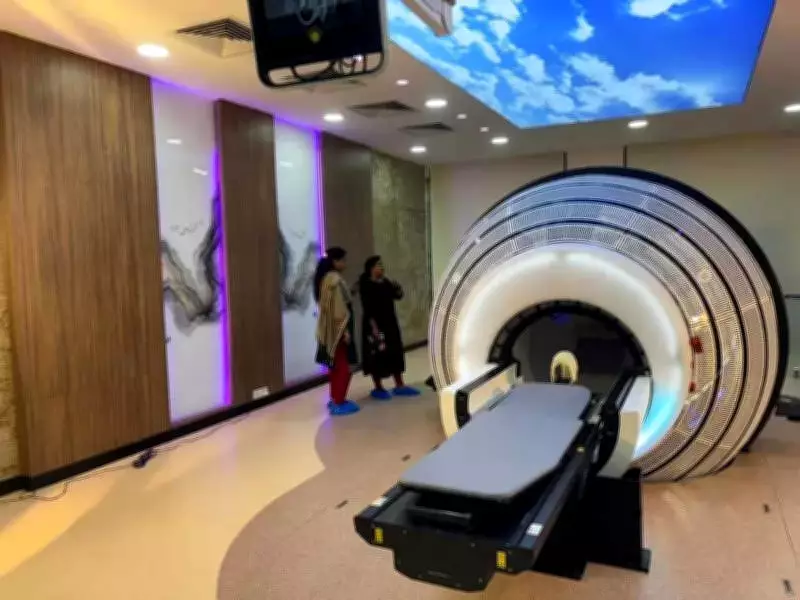
In a significant medical advancement for South India, AIG Hospitals in Gachibowli, Hyderabad, has installed the cutting-edge ZAP-X Gyroscopic Neuro-Radiosurgery Platform. The facility was officially inaugurated on Friday by Telangana Health Minister Damodar Rajanarasimha, marking a milestone in non-invasive brain tumor treatment.
Revolutionizing Traditional Treatment Approaches
Traditionally, treating brain tumors has required complex neurosurgical procedures involving lengthy hospital stays and extended recovery periods that could span weeks. According to medical experts, this new technology fundamentally changes that paradigm.
The ZAP-X system enables complete treatment in a single day, with most patients able to return home on the same day. This groundbreaking approach destroys tumors without requiring any opening of the skull, representing a major leap forward in patient care and recovery.

Technical Capabilities and Patient Benefits
Dr. D Nageshwar Reddy, Chairman of AIG Hospitals, explained the system's operation: "First, doctors conduct detailed scans of the patient. Then, they direct highly precise radiation beams to the exact tumor location, effectively destroying the tumor while protecting surrounding healthy tissue."
The treatment typically takes just 30–45 minutes per session, and the hospital currently has capacity to treat six patients daily. The technology is particularly valuable for treating brain metastases—tumors that spread to the brain from cancers originating in other organs such as lungs, breasts, or pancreas.
Expanding Treatment Accessibility
Medical professionals note that the treatment is suitable for patients aged 2.5 years and above, with no strict upper age limit. This makes the technology especially beneficial for elderly patients who may not be medically fit for major surgical interventions.
Dr. John R Adler, the global neurosurgeon who invented the ZAP-X system, emphasized its effectiveness for smaller tumors, typically resulting in fewer complications than traditional approaches. "For tumors measuring four to five centimeters, the machine can provide effective treatment. For larger tumors, surgeons might first remove the main mass through surgery, then use ZAP-X to treat remaining portions located deep within the brain," he explained.
Economic and Research Implications
Dr. Adler highlighted that with regular use, the system could potentially treat up to 3,000 patients annually. While the initial investment is substantial, treating large patient volumes makes the cost per patient relatively affordable for healthcare institutions.
Beyond tumor treatment, researchers are exploring the technology's potential applications for various brain disorders. Dr. Reddy revealed that ongoing research is investigating whether the system could treat conditions like depression, addiction, and obesity without damaging healthy brain tissue.
Regional Significance and Future Impact
This installation represents the first of its kind in South India and only the second in the entire country, positioning Hyderabad as a regional leader in advanced neurological care. The technology promises to transform brain tumor treatment protocols, offering patients faster recovery, reduced complications, and improved quality of life compared to traditional surgical methods.