

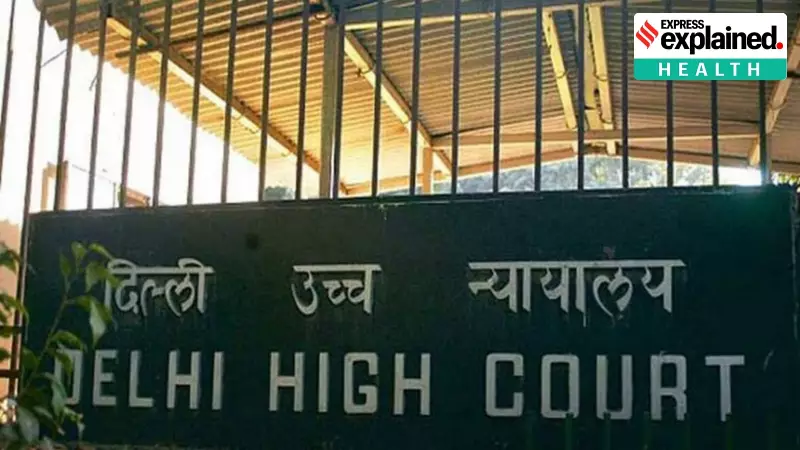
Delhi High Court Clears Path for Affordable Cancer Treatment
The Delhi High Court has delivered a landmark verdict that could dramatically reduce the cost of a vital cancer therapy in India. On January 12, the court allowed Indian pharmaceutical company Zydus Lifesciences to manufacture and sell a biosimilar version of the blockbuster drug Nivolumab. This decision prioritizes public interest, potentially making life-saving immunotherapy accessible to thousands more patients across the country.
What is Nivolumab and Why is it Important?
Nivolumab represents a significant advancement in cancer treatment. It belongs to a class of drugs known as monoclonal antibodies. Unlike traditional chemotherapy, which attacks both cancerous and healthy cells, Nivolumab works by boosting the body's own immune system to specifically target and destroy cancer cells. This approach, called immunotherapy, has transformed medical oncology.
Dr. Shashank Pandya, director of the Gujarat Cancer Research Institute, explains the impact. "This class of drugs has changed the landscape, especially for lung cancers. It improves both the duration and quality of life for patients."

The drug has proven effective against a wide range of cancers, including:
- Lung cancer
- Renal (kidney) cancer
- Head and neck cancers
- Melanoma
- Urothelial carcinoma
- Oesophageal and gastric cancers
Globally, the drug is sold under the brand name Opdivo. In India, Bristol Myers-Squibb (BMS) markets it as Opdyta. The US Food and Drug Administration designated it as a "Breakthrough Therapy," fast-tracking its development due to its potential.
The High Cost of Treatment in India
Despite its effectiveness, Nivolumab's price has placed it out of reach for many Indian patients. A single vial of Opdyta can cost between Rs 45,000 and Rs 1 lakh, depending on the dosage strength. A typical treatment regimen requires doses every two to four weeks, leading to monthly costs that can soar to Rs 2-3.5 lakh.
While the Central Government Health Scheme covers immunotherapies, the Pradhan Mantri Jan Arogya Yojana (PMJAY) does not include them. This gap leaves numerous patients struggling to afford the treatment.
BMS reported that Nivolumab generated approximately $9 billion in global revenue in 2023. Recent financial reports indicate quarterly earnings from the drug exceeding $2 billion. The company holds the patent in India until May 2026.
How the Court Case Unfolded
In 2024, BMS filed a case in the Delhi High Court against Zydus Lifesciences. The global pharma giant alleged that Zydus was preparing to launch its biosimilar version of Nivolumab despite the active patent. A single-judge bench initially ruled in favor of BMS on May 8, 2024, restraining Zydus from marketing its product without court permission.
However, a division bench comprising Justices C Hari Shankar and Om Prakash Shukla recently overturned that decision. The judges considered two critical factors:
- Public Interest: Zydus argued that its biosimilar would be up to 70% cheaper than the patented drug.
- Imminent Patent Expiry: The BMS patent is set to expire in just a few months, in May 2026.
The court's ruling emphasized the life-saving nature of the drug. "Where the product in question is a life-saving drug, the Court has to err in favour of public interest," the bench stated. "Withholding such therapy from the public can cause untold and irreparable prejudice to lakhs of lives."
The judges also noted a technical legal point. The earlier single-judge bench used a "product-to-product" comparison to assess patent infringement. The division bench found that a "product-to-claim" mapping was the more appropriate legal test, which influenced their final decision.
The Promise of Biosimilars and Lower Costs
Zydus Lifesciences has branded its biosimilar version of Nivolumab as "Tishtha." The company estimates that a full year's treatment with Tishtha could cost between Rs 3.86 lakh and Rs 6.46 lakh. This represents a potential reduction to one-third or one-fourth of the current treatment costs.

Biosimilars are biological products highly similar to an already approved reference biologic. They undergo rigorous testing to ensure they match the safety and efficacy of the original drug. The entry of biosimilars into the market typically drives competition and significantly lowers prices.
Medical oncologists note that drug prices often drop as patents near expiration. Companies sometimes introduce patient assistance programs or reduce prices to maintain market share before facing generic or biosimilar competition.
The Delhi High Court's decision marks a crucial step toward affordable cancer care in India. By allowing Zydus to bring its biosimilar to market before the patent expiry, the court has prioritized patient access over corporate monopoly. This move could set a precedent for future cases involving essential medicines, ensuring that public health remains a paramount consideration in India's legal and pharmaceutical landscape.





