Leonardo da Vinci's 500-Year-Old Heart Mystery Finally Decoded by Modern Science
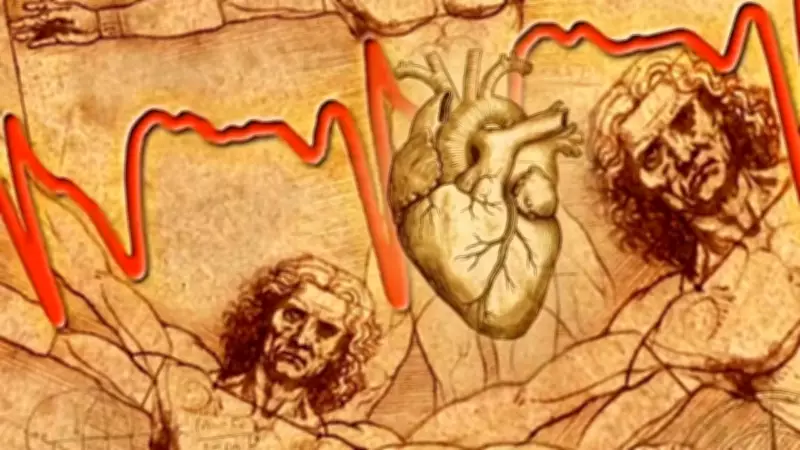
Long before the advent of modern medicine, Renaissance polymath Leonardo da Vinci was meticulously sketching the intricate details of the human body. Among his most curious anatomical drawings was a detailed depiction of the interior of the human heart, a structure that remained largely misunderstood for centuries. Recent scientific breakthroughs have now unraveled what Da Vinci was observing—a mysterious mesh-like network inside the heart known as trabeculae.
The Historical Puzzle of Trabeculae
For over 500 years, this spongy, branching structure within the heart's ventricles has puzzled scientists and medical professionals. Visible in anatomy textbooks and medical scans, trabeculae were often dismissed as mere internal texture or biological noise from developmental processes. However, a groundbreaking study published in the journal Nature, titled 'Genetic and functional insights into the fractal structure of the heart,' has transformed this perception.
Da Vinci, who personally dissected human bodies—a rare and controversial practice in his era—noticed these tree-like patterns in the heart chambers. He theorized they might function as a natural heating system to warm the blood. While his hypothesis was creative, modern experts clarify it wasn't entirely accurate, yet it captured the essence of something significant.

Modern Revelations Through Technology and Genetics
Today, researchers have leveraged advanced technologies to uncover the true role of trabeculae. Using large-scale MRI scans from extensive population studies, including data from tens of thousands of individuals in sources like the UK Biobank, scientists have identified correlations between specific trabecular patterns and the risk of cardiovascular disease. Although not definitive, these findings are compelling enough to warrant serious attention.
Computer simulations modeling blood flow through these structures suggest that the internal "texture" of the heart may influence its pumping efficiency more than previously believed. Some trabecular shapes appear linked to enhanced heart performance, indicating a functional purpose beyond mere anatomical decoration.
The Genetic and Fractal Nature of Trabeculae
Further insights come from genetics, where researchers have pinpointed multiple genetic locations associated with the formation of trabeculae. This discovery confirms that these structures are not random but are biologically coded from early development. The trabeculae exhibit fractal patterns, meaning they branch in repeating, self-similar ways akin to natural phenomena like trees, rivers, and lightning.
Experts explain that such fractal structures often emerge in nature to optimize efficiency within confined spaces, and the heart appears to follow this same logical blueprint. This genetic and fractal understanding provides a deeper explanation for how trabeculae form and function.
Da Vinci's Legacy and Ongoing Research
It is remarkable that a Renaissance artist, armed only with keen observation and rudimentary tools, sketched a structure that modern science is only now fully explaining with MRI machines and genomic maps. While Da Vinci may have been incorrect about the specific function, his recognition of trabeculae as a real and notable feature was prescient.
Despite these advances, not all mysteries are solved. The precise links between trabeculae shape and heart disease risk are still under investigation, with ongoing studies aiming to fill in the missing pieces of the puzzle. However, the direction of research is clearer than ever, marking a significant leap from the obscurity of past centuries.
In summary, Leonardo da Vinci's centuries-old heart drawings have inspired a modern scientific journey that blends history, anatomy, genetics, and technology. The unraveling of trabeculae's role highlights how ancient observations can guide contemporary discoveries, offering new perspectives on cardiovascular health and human biology.