

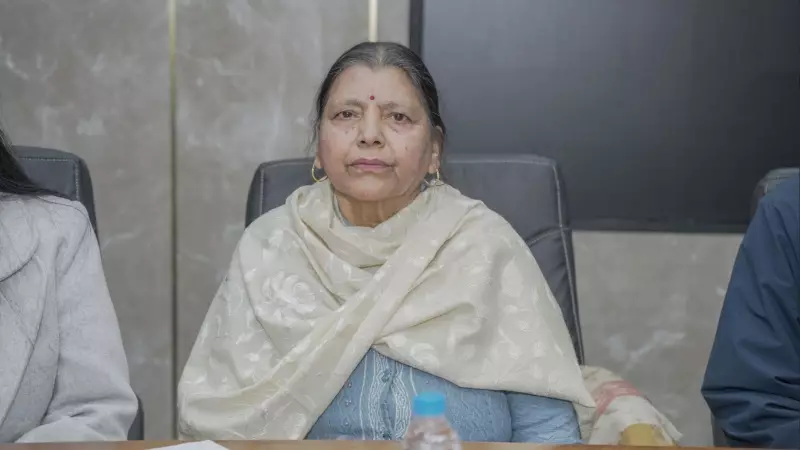
78-Year-Old Defies Aggressive Breast Cancer with Cryoablation: A Medical Breakthrough for Elderly Patients
For Chanderkala Lohani, a resilient 78-year-old woman, life has been a series of formidable challenges. After losing her husband at a young age, she single-handedly raised three daughters and a son, demonstrating unwavering strength. However, her toughest battle began at age 64 when she was diagnosed with the most aggressive form of breast cancer, compounded by an undetected genetic heart condition that severely limited her treatment options.
A Diagnosis That Changed Everything
Lohani was diagnosed with triple-negative breast cancer, which presented as a small lump in the upper side of her left breast. Triple-negative breast cancer lacks three common receptors—estrogen, progesterone, and HER2—that are typically targeted in standard treatments. This absence meant that hormone therapies and HER2-targeted drugs were ineffective for her case.
Adding to the complexity, Lohani had hypertrophic cardiomyopathy, a condition that thickened her heart muscles and impaired blood pumping. This made general anesthesia during surgery too risky, as it could stress her compromised heart and potentially lead to sudden death. Chemotherapy and radiotherapy were also ruled out due to their cardiotoxic effects, leaving her with few conventional avenues for treatment.

The Initial Battle and Recurrence
Dr. Ramesh Sarin, a surgical oncologist at Apollo Hospital in Delhi, explains the initial approach: "With triple-negative breast cancer spreading rapidly, we had to act quickly. We performed surgery using local anesthesia and sedation to minimize risks to her heart." Fortunately, the procedure was successful in removing the tumour entirely at that time.
However, triple-negative breast cancer is notorious for its high recurrence rate, and Lohani was no exception. During a routine follow-up screening last year, the cancer was detected again. She remained a high-risk patient, forcing doctors to weigh whether her co-morbidities or the cancer posed a greater threat during treatment.
A Novel Solution: Cryoablation
This time, Lohani had access to a groundbreaking alternative: cryoablation. This minimally invasive treatment destroys breast tumours by freezing them, eliminating the need for surgical removal. Dr. Sarin highlights its benefits: "Cryoablation is approved by the US FDA, offers a quick recovery, and allows patients to go home the same day, reducing hospital stays. It's particularly valuable for elderly patients who cannot undergo conventional surgery." He even plans to use it for a 95-year-old patient, underscoring its potential for high-risk individuals.
How Cryoablation Works
While surgery remains the standard first-line treatment for breast cancer, cryoablation provides an option for carefully selected patients, such as those medically unfit for surgery. In this procedure:
- A thin, needle-like probe is inserted into the tumour under ultrasound or CT guidance.
- Extremely cold temperatures are applied, forming an ice ball around the cancer cells.
- This freezing process damages and kills the cells, with the body naturally removing the destroyed tissue over time.
Typically performed under local anesthesia in less than an hour, cryoablation results in minimal pain, little scarring, and a quicker recovery. Scans have confirmed that Lohani's tumour has been completely destroyed, marking a significant victory in her fight against cancer.
Eligibility and Success Rates
Cryoablation is not a one-size-fits-all solution. It is suitable for early-stage breast cancers (T1 or T2 tumours measuring less than 5 cm) that have not spread to lymph nodes or other parts of the body. The tumour must also have well-defined margins to ensure complete freezing.
Currently, it is primarily used for small, early-stage cancers in patients who cannot undergo surgery due to age or medical conditions. While not yet a standard replacement for surgery, as long-term outcomes are still under study, success rates are promising. Major trials show:

- Almost 100% complete ablation for tumours ≤1 cm.
- Success rates in the 90%+ range for tumours up to about 2 cm.
- In the ICE3 clinical trial, 96–97% of patients were free of local recurrence at 5 years, comparable to lumpectomy outcomes.
Cost Considerations
Cryoablation costs between Rs 2 to 6 lakh, nearly twice the price of regular breast cancer surgery, though it eliminates additional costs for supportive therapies. Insurance coverage is limited due to its status as a newer, less-conventional treatment, but it may be covered if deemed medically necessary and pre-authorised. This underscores that cryoablation is reserved for very specific cases where traditional options are not viable.
Chanderkala Lohani's journey exemplifies that cancer can be fought at any age, with technology offering new hope. Her story not only highlights personal resilience but also paves the way for innovative treatments that cater to the unique needs of elderly and high-risk patients.





