

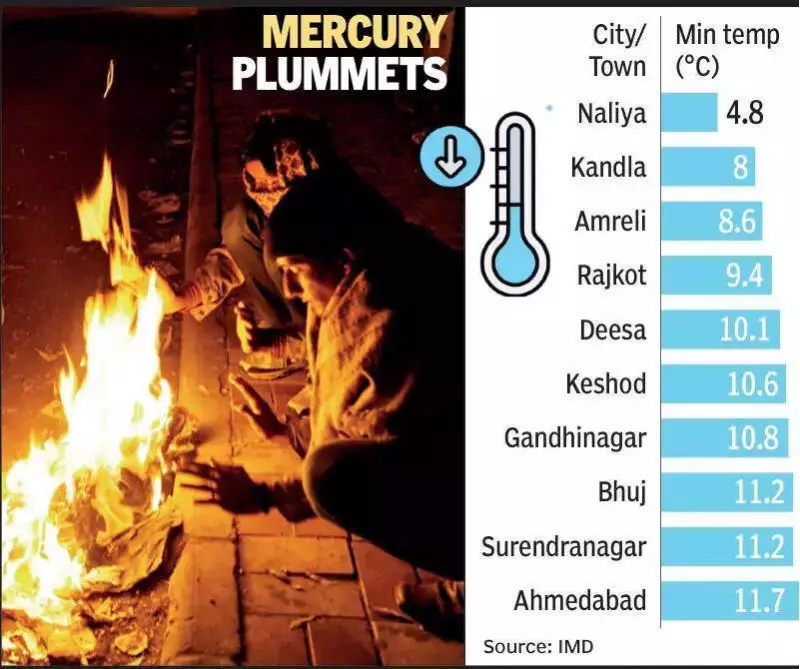
Ahmedabad woke up to its coldest morning of the season on Friday, as the mercury plunged to a winter low of 11.7 degrees Celsius. According to data from the India Meteorological Department (IMD), this reading was 0.5 degrees below the normal average for the city.
A Statewide Chill Grips Gujarat
The dip in temperature was not isolated to Ahmedabad. A shift to northerly and north-easterly winds carried colder air across Gujarat, leading to a widespread drop in minimum temperatures. The coldest spot in the state was Naliya, recording a frigid 4.8°C, its lowest this season. It was followed by Kandla at 8°C, Amreli at 8.6°C, and Rajkot at 9.4°C.
For Ahmedabad, this was the first significant sub-normal temperature reading since December 12, when it was marginally lower by 0.1 degrees. The city's maximum temperature also fell, settling at 27.6°C, which is 0.3 degrees below normal, allowing residents to feel the cold winds during morning and evening hours.

IMD Forecast and Winter Trend
The weather office has predicted that the chill will persist in the short term. The IMD forecast indicates that Ahmedabad's minimum temperature may touch 11°C on Saturday. The state forecast stated, "No large change in minimum temperatures during the next 48 hours. Thereafter, a gradual rise by 2 to 3 degrees is very likely."
This cold spell marks a shift from the prevailing trend this winter, where minimum temperatures had remained above normal for most of December.
Health Impact: Rise in Viral Infections
The sudden drop in temperature has had a direct impact on public health, with city doctors reporting a noticeable increase in cases of viral infections. This surge comes after a period of warmer days and cooler nights, a weather change that often triggers such outbreaks.
Patients are presenting with a common set of symptoms, including:
- Prolonged dry cough
- One or more bouts of low-grade fever
- General body ache
- Sneezing and irritation in the nose and throat
Dr. Maharshi Desai, an internal medicine specialist, explained, "Weather changes often lead to a rise in viral infections. The prevalence of flu is relatively low among those tested, suggesting symptoms are more likely linked to the weather shift." He also pointed to seasonal pollen and pollutants lingering at lower levels, which can exacerbate allergies and prolong irritation.
Medical Experts Caution Against Self-Medication
A critical concern raised by healthcare professionals is the tendency of patients to self-medicate, particularly with antibiotics. Medical experts have strongly cautioned against this indiscriminate use, emphasizing that antibiotics are ineffective against viral infections.
Dr. R C Damani, another internal medicine specialist, noted that such viral infections frequently spread within families but typically remain mild. He urged residents not to take antibiotics without medical advice, warning that misuse contributes significantly to the growing burden of antimicrobial-resistant (AMR) organisms.
Echoing this sentiment, Dr. Mehul Shelat, secretary of the Ahmedabad Family Physicians' Association (AFPA), said many patients take medicines before consulting a doctor. "Most viral infections are managed with symptomatic treatment, including adequate hydration and rest. Unnecessary medication should be avoided," he advised. Experts stress that seasonal dry coughs can persist for over two weeks and require patience and proper care, not antibiotics.






