

Delhi High Court Steps In as Patients Brave Winter Outside Hospitals
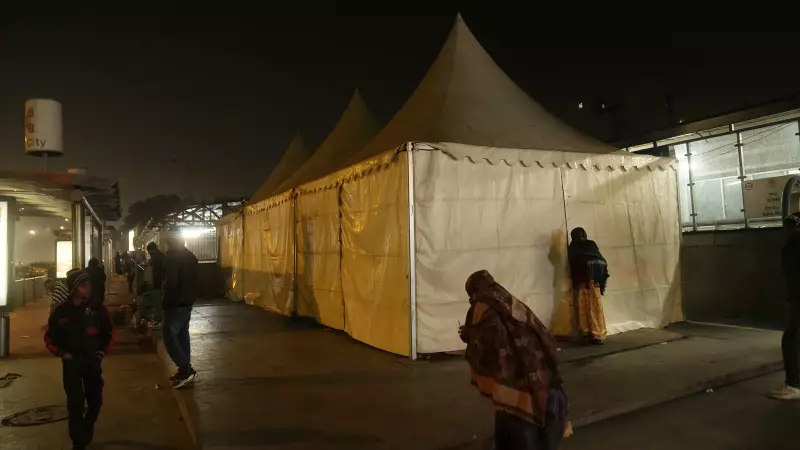
The Delhi High Court has taken decisive action this week. It responded to alarming reports about patients and their attendants sleeping in the open during a brutal cold wave. The court directed authorities to provide immediate shelter. As a result, temporary tents have now sprung up near major hospitals like the AIIMS Trauma Centre and Ram Manohar Lohia Hospital.
A Night in the Subway Before Relief Arrived
On a freezing Friday night, Laliya Khan, in her sixties, and her husband Jahid Ali searched for a place to sleep. They had come from Uttar Pradesh for medical treatment at AIIMS. With bags full of blankets and health reports, they settled on the tiled floor of a Delhi Metro subway station near the hospital.
"I got my MRI done today, and my husband came for a routine check-up. He is a heart patient," Laliya explained, as a blood-stained cotton swab from her tests fell to the ground.

Police officers soon arrived with new instructions. "Please don't sit here, go to the Trauma Centre. Vehicles are parked outside to take you there. This is a Delhi High Court order," one officer announced. The couple, initially puzzled, eventually boarded a hospital buggy. It transported them to a row of nine newly erected tents.
Court Directive Leads to Rapid Shelter Setup
The High Court acted on Wednesday after learning that official night shelters were full. This forced many awaiting treatment or accompanying loved ones to sleep outdoors in dangerously low temperatures. Delhi had just recorded its coldest morning of the season at 2.9°C.
The court specifically impleaded four major central government hospitals in the case:
- All India Institute of Medical Sciences (AIIMS)
- VMMC & Safdarjung Hospital
- Lady Hardinge Hospital
- Dr. Ram Manohar Lohia Hospital
It ordered the Delhi Urban Shelter Improvement Board to take immediate temporary control of subways near these hospitals. The directive included making arrangements like setting up beds.
A meeting followed on January 15th with all stakeholders. Officials identified open plots near hospital complexes where temporary shelters, called 'pagodas', could be quickly erected. Each shelter can accommodate 20 to 25 people.
Inside the New Temporary Shelters
Laliya and Jahid found a spot in one of the tents near AIIMS. The ground was covered with thick foam sheets. Around fifteen other people shared the space. A young mother tried to soothe her child to sleep. Another person watched a video about cancer treatment.
Nearby, Raziya and Javed Ali from Muzaffarnagar settled in. Raziya, diagnosed with stage-2 blood cancer, has been traveling to AIIMS for treatment since last year. "We usually take the injection shots and leave the same day, but the appointment got delayed today. So, we have to sleep here," she said, worried the cold might worsen her condition.
Rajesh Kumar, 45, from Baghpat, Uttar Pradesh, felt relief. "For the last two years, we have been coming here to get my nephew treated for fits. We slept in the subway as we couldn't afford a lodge or a hotel. I was relieved to see the facility today," he told his wife over the phone.
Shelter Efforts Expand Across Major Hospitals
During a hearing on Friday, the counsel for DUSIB informed the court that twenty new pagodas were already set up near AIIMS and Safdarjung Hospital. More were planned by evening. Additionally, twenty tents each were erected near RML Hospital and Lady Hardinge Hospital.
At RML Hospital, about eight kilometers away, the situation had been dire. Families were seen sleeping beneath parked stretchers inside the Trauma Centre or on narrow marble ledges outside. Khushi Thakur, 19, has been waiting near the emergency ward since December 25th. Her six-month-old child is in the ICU for seizure attacks.
"Bacche ke liye rehna padhta hai adjustment karke (We have to manage and adjust for the sake of our child)," she said, squatting with her husband and mother. She noted that patients have now marked their spots in an organized manner to avoid conflicts.

RML Hospital officials identified space in the Centre Park for at least twenty pagodas. However, setup faced delays. When visited on Friday, only eight canopies were fixed, with a stack of beds lying unattended. A contractor on site explained the challenges. "How can tents be prepared in a day? First, the flooring needs to be readied. Workers have not been coming due to the winter," he said.
An officer appointed to oversee the facilities reported progress by Saturday. "A total of nine tents have been erected until Saturday and the rest will be made available soon. Around 56 people have come to take shelter here today," he stated.
The swift court intervention has provided a critical, though temporary, reprieve. It offers basic shelter for vulnerable patients and families braving one of Delhi's coldest winters in recent years outside the nation's premier hospitals.





