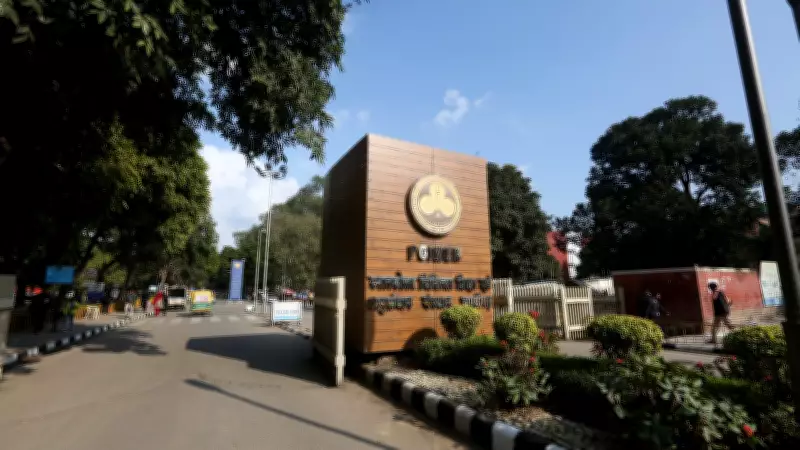
PGI Chandigarh Achieves Milestone with 1.75 Lakh Ayushman Bharat Beneficiaries Since 2019
The Post Graduate Institute of Medical Education & Research (PGIMER) in Chandigarh has established a remarkable benchmark in public healthcare by treating a cumulative total of 1,75,676 beneficiaries under the Ayushman Bharat-Pradhan Mantri Jan Arogya Yojana (AB-PMJAY) since the scheme's inception in 2019. This significant achievement underscores the institute's pivotal role in delivering high-quality medical care to economically disadvantaged patients across India.
Year-Wise Breakdown and State-Wise Distribution
Detailed data from PGI reveals a consistent upward trajectory in the number of beneficiaries treated under the scheme each year:
- 2019-20: 9,201 beneficiaries
- 2020-21: 10,442 beneficiaries
- 2021-22: 17,019 beneficiaries
- 2022-23: 33,142 beneficiaries
- 2023-24: 32,223 beneficiaries
- 2024-25: 39,227 beneficiaries
- 2025-26 (so far): 34,422 beneficiaries
Geographically, Punjab leads the distribution, accounting for 46% of the total beneficiaries. Other states contributing significantly include:

- Haryana: 20%
- Himachal Pradesh: 9%
- Uttar Pradesh: 7%
- Jammu & Kashmir: 6%
- Chandigarh: 4%
- Other states combined: 8%
Specialty-Wise Focus on Advanced Medical Care
PGI's specialty-wise distribution highlights its commitment to providing advanced and resource-intensive treatments under AB-PMJAY. The top specialties by beneficiary count are:
- Medical Oncology: 53,940 beneficiaries
- General Medicine: 42,870 beneficiaries
- Cardiology: 15,050 beneficiaries
- Neurosurgery: 13,500 beneficiaries
- Orthopaedics: 11,220 beneficiaries
- Kidney Transplantation: 211 beneficiaries
This distribution reflects PGI's role as a tertiary care referral center, handling complex cases that often require specialized expertise and high-end medical interventions.
Clinical Outcomes and Institutional Impact
PGI Director Prof Vivek Lal emphasized that the institute's involvement in AB-PMJAY represents a healthcare revolution in India. "Ayushman Bharat is nothing short of a healthcare revolution in India, and PGI is proud to be at the forefront of translating this vision into reality," he stated.
Prof Lal further noted that PGI records one of the highest volumes of Ayushman Bharat beneficiaries in the country, with a substantial proportion of complex procedures—such as renal transplants, spine surgeries, and joint replacements—being performed under the scheme. "Clinical outcomes at PGI are comparable to those of leading global institutions, despite zero out-of-pocket expenditure for patients," he added.
A recently completed institutional study, among the first globally to analyze real-world outcomes, has validated these claims, demonstrating that patients treated under AB-PMJAY at PGIMER achieve outcomes on par with international standards.
Digital Transformation and Operational Efficiency
The implementation of Ayushman Bharat 2.0 has significantly enhanced PGI's service delivery ecosystem through comprehensive digitization. Key improvements include:
- Biometric verification at admission to ensure authenticity
- Seamless bedside delivery of medicines
- Robust online indenting and inventory management systems to enhance transparency and accountability
Prof Lal highlighted that this digital oversight has been crucial in protecting patient interests, optimizing public resources, and ensuring that the full benefits of Ayushman Bharat reach intended beneficiaries without compromise.

Financial Accountability and Institutional Reforms
PGI has also made strides in financial management under the scheme. Pending payments to pharmacy outlets, which once amounted to tens of crores of rupees, have now been reduced to less than Rs 2 crore. This reduction ensures uninterrupted stocking, ethical practices, and proper storage of medicines.
Dedicated monitoring mechanisms and periodic reviews have further reinforced institutional accountability, making AB-PMJAY a lived reality for patients rather than just a policy on paper.
Conclusion: A Model for Public Healthcare
PGI Chandigarh's success with AB-PMJAY serves as a model for other institutions across India. By treating over 1.75 lakh beneficiaries, achieving international-standard outcomes, and implementing efficient digital systems, PGI demonstrates how public healthcare schemes can effectively bridge the gap between quality medical care and affordability. As Prof Lal aptly summarized, "At PGI, government schemes are not just policies on paper, they are lived realities for patients."