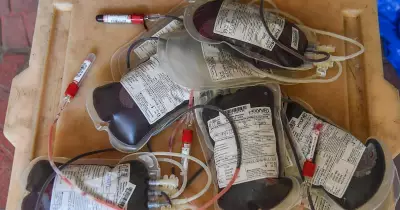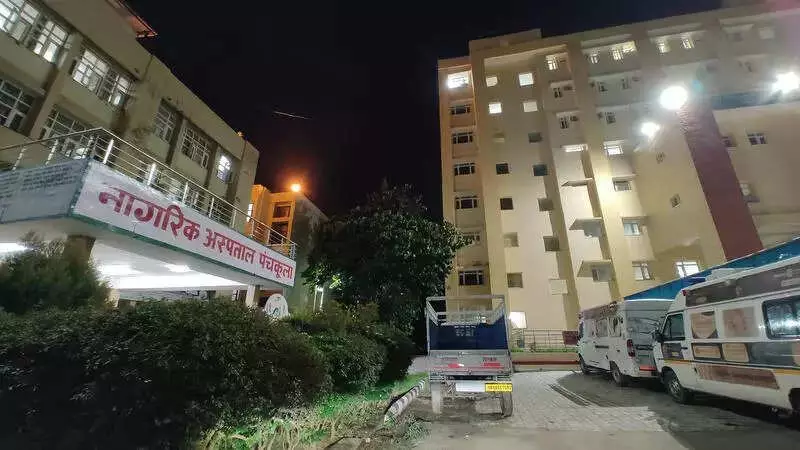
A major financial scandal involving the disappearance of official billing documents worth a staggering Rs 15 crore has been uncovered at the Post Graduate Institute of Medical Education and Research (PGI) in Chandigarh. A preliminary inquiry by the institute's own vigilance cell has shifted the narrative from theft to a suspected "deliberate elimination" of records, potentially to cover up large-scale financial irregularities.
The Mysterious Disappearance of Bill Bundles
The scandal came to light in March 2025, when 364 bundles of bills raised by the Amrit pharmacy under various government health schemes vanished from the central store of Nehru Hospital. These bills were related to critical schemes like Ayushman Bharat, HIMCARE, and the Janani Shishu Suraksha Karyakram (JSSK). The following month, in April 2025, the PGI vigilance department was formally tasked with investigating the misplaced verified bills.
Insiders revealed that bills worth lakhs, specifically earmarked for Ayushman Bharat beneficiaries, had gone missing, immediately raising red flags about potential financial misappropriation. While initial CCTV footage from March 23 showed a person jumping a boundary wall with a sack, investigators noted a critical inconsistency: the locked doors and windows of the bill section were not broken. This detail led the vigilance report to a damning conclusion, stating the disappearance "cannot be supposed to occur without the connivance of the internal workers/staff", effectively branding it an inside job.

Unauthorized Links and Deliberate Diversions
The inquiry dug deeper, exposing an "unauthorised" relationship between the PGI central cell and Amrit pharmacy. It was found that several outsourced employees working in PGI's central cell were formerly employed by Amrit pharmacy. More alarmingly, a staff member from the pharmacy was reportedly deployed directly within the PGI bill section to assist with data entry work.
The plot thickened when the accounts department requested digital "soft forms" of the missing 364 bill bundles. Instead of this sensitive task being handled by authorized PGI personnel, it was deliberately diverted to the staff of Amrit pharmacy. This irregularity pointed to a coordinated effort to control the flow of information and documentation.
Destroying Evidence to Protect Illicit Gains?
The vigilance cell raised a serious possibility: the bills were intentionally destroyed to hide evidence of fraud. The report explicitly states, "There might be a possibility of inflated bills/indents or duplicate indents in high-valued bills." Investigators suggest that when the accounts department demanded a detailed description of every bill, the involved parties feared a major controversy.
This fear was compounded by separate ongoing cases involving stolen PGI indent books and stamps. By physically removing the bill bundles, the suspects could potentially ensure that a Rs 15 crore advance already paid to Amrit pharmacy would not need to be adjusted or recovered, as those funds were meant to be reconciled against these very documents.
What the Vigilance Cell Recommends
The inquiry report has put forth a series of strong recommendations to address the systemic failures:
- Police Intervention: Lodging an FIR with the Chandigarh crime branch due to the "mysterious" and repeated nature of such incidents.
- Security Overhaul: Conducting a comprehensive security audit by a specialized agency.
- Policy Changes: Restricting contractual staff from handling sensitive payment-related functions and implementing an online indent system to prevent manual tampering.
- Disciplinary Action: Taking strict action against regular officers for "negligence and dereliction of duty."
The scandal at one of India's premier medical institutes underscores severe lapses in financial governance and internal controls, especially concerning public health funds meant for the nation's most vulnerable citizens.