In a decisive move to curb corruption and ensure transparency, the Post Graduate Institute of Medical Education and Research (PGI) in Chandigarh has completely abolished its manual indent book system. This transformation to a fully digital process comes in the wake of a massive Rs 15 crore billing scandal that exposed critical vulnerabilities in the old paperwork-driven method.
The Digital Overhaul: Ending an Era of Manual Books
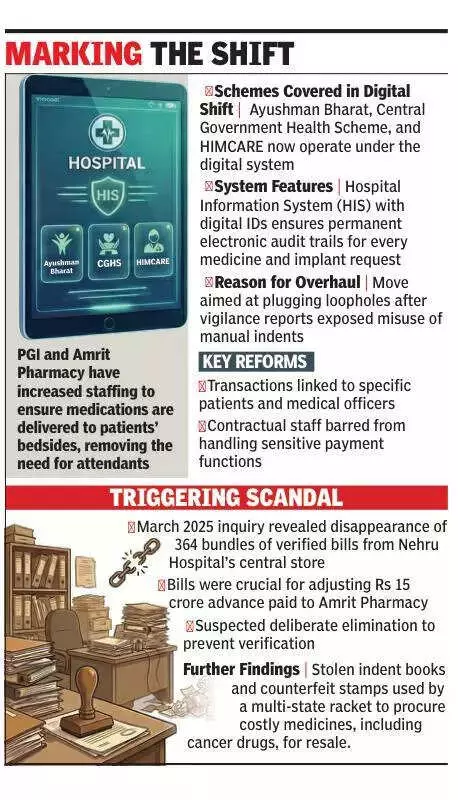
The institute confirmed this landmark shift in a response to a Right to Information (RTI) application filed by activist Ashwani Kumar Munjal. The reply, issued on January 9, 2026, stated that the manual system has been "completely replaced" across all major healthcare schemes. This includes flagship programs like Ayushman Bharat, the Central Government Health Scheme (CGHS), and HIMCARE.
The new system leverages the existing Hospital Information System (HIS), where every request for medicine or implants is now made using dedicated digital IDs. This creates an immutable electronic audit trail for every single transaction. The change effectively makes it impossible to "lose" paper records or use forged stamps, practices that were allegedly exploited in the past to siphon off funds.

The Scandal That Forced Change
The push for digital reform gained urgent momentum after a shocking discovery in March 2025. A preliminary inquiry by the PGI Vigilance Cell found that 364 bundles of verified bills had vanished from the central store of Nehru Hospital. These documents were crucial for reconciling accounts against a hefty Rs 15 crore advance already paid to Amrit Pharmacy.
Investigators suspect this was a case of "deliberate elimination" rather than mere theft. By destroying these billing proofs, the suspects allegedly aimed to prevent the accounts department from verifying details, thereby allowing the pharmacy to retain the entire advance amount. This scandal was further entangled with the discovery of stolen indent books and counterfeit stamps used by a multi-state racket to procure expensive medicines, including cancer drugs, for resale to private stores.
Key Reforms and New Safeguards
The reforms, rooted in a critical vigilance report from September 9, 2024, have instituted several layers of accountability:
- Digital Accountability: Every transaction is now directly linked to a specific patient and the authorizing medical officer within the HIS, leaving no room for anonymous or fake indents.
- Direct Bedside Delivery: PGI and Amrit Pharmacy have increased staffing to ensure medicines are delivered directly to patients, eliminating the need for attendants to handle paper indents and reducing intermediary risks.
- Restricted Access: Contractual staff are now barred from handling sensitive payment-related functions to prevent the "connivance" highlighted in earlier reports.
This comprehensive digital transition at PGI Chandigarh marks a significant step towards securing public funds in cashless healthcare schemes. By plugging the systemic loopholes offered by manual indent books, the institute aims to restore integrity and ensure that resources reach the patients they are intended for.