The National Green Tribunal has demanded immediate answers from the Central Pollution Control Board and other authorities. This action follows alarming media reports about sewage-contaminated water reaching residents in several cities across three states.
Serious Health Concerns Raised
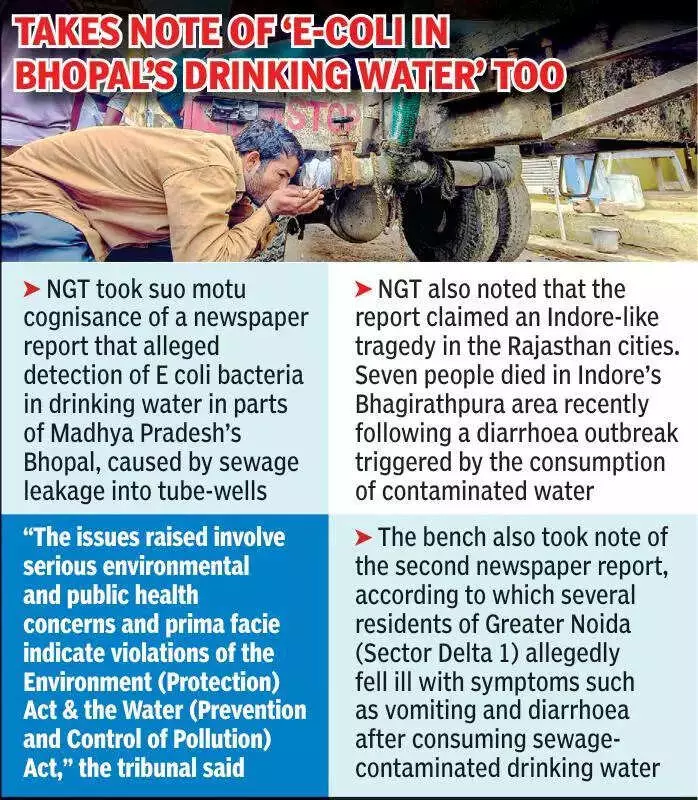
Media investigations revealed dangerous contamination in drinking water supplies. The tribunal specifically noted a newspaper report about E coli bacteria detection in parts of Bhopal, Madhya Pradesh. This contamination reportedly occurred due to sewage leakage into tube-wells that supply drinking water to residents.
The NGT stated clearly that these issues involve serious environmental and public health concerns. The tribunal believes these incidents prima facie indicate violations of important environmental laws. These include the Environment (Protection) Act and the Water (Prevention and Control of Pollution) Act.

Suo Motu Action Taken
On Tuesday, the green body took suo motu cognisance of two newspaper reports. These reports detailed the alleged supply of contaminated water in Madhya Pradesh, Rajasthan and Uttar Pradesh. A bench headed by Chairperson Justice Prakash Shrivastava and expert member A Senthil Vel examined the concerning revelations.
The first report highlighted grave health risks in several Rajasthan cities. According to the report, sewage water had mixed with drinking water pipelines. This dangerous mixing occurred because of corroded and decades-old infrastructure in multiple urban areas.
Affected Cities Identified
The contamination reportedly affects numerous cities across Rajasthan. These include Udaipur, Jodhpur, Kota, Banswara, Jaipur, Ajmer and Bora. The report made a particularly disturbing comparison. It claimed these Rajasthan cities could face an Indore-like tragedy if immediate action is not taken.
This reference points to a recent tragic incident in Indore's Bhagirathpura area. Seven people died there following a diarrhoea outbreak. Health authorities confirmed that contaminated water consumption triggered this outbreak.
Response Demanded from Multiple Authorities
The National Green Tribunal has formally sought responses from several key bodies. The Central Pollution Control Board must explain the situation and proposed solutions. The states of Rajasthan, Madhya Pradesh and Uttar Pradesh must also provide detailed responses.
Additionally, the tribunal has asked for input from state pollution control boards in all three affected states. Regional offices of the Ministry of Environment, Forest and Climate Change must also respond to these serious allegations. The NGT expects these authorities to address both the immediate contamination and long-term infrastructure solutions.
This case highlights critical failures in water supply systems across multiple states. Residents in affected cities continue to receive potentially dangerous drinking water. The tribunal's intervention seeks to force accountability and prompt immediate corrective measures.